Episode #45
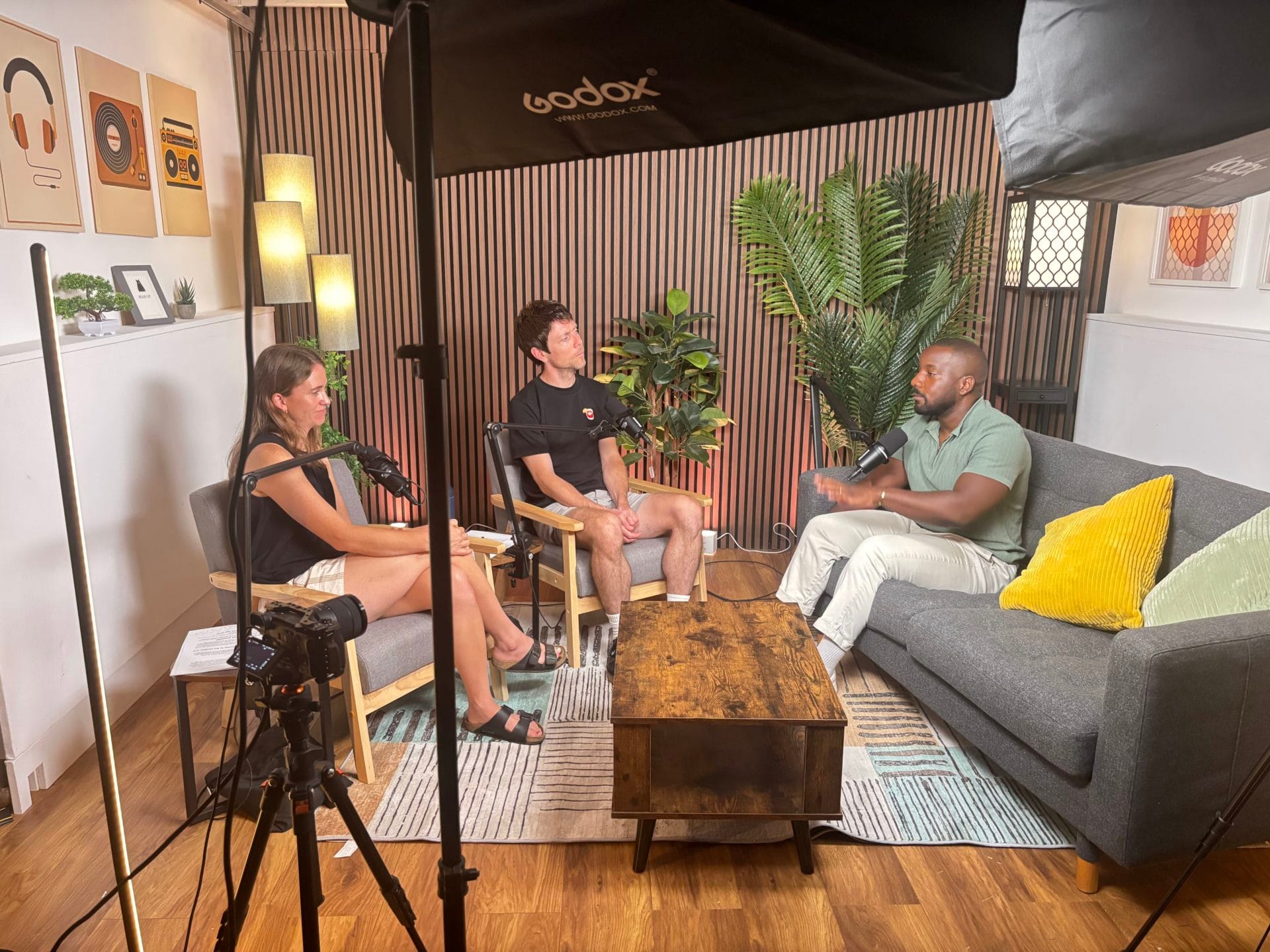
In this episode, Steve and Stephanie are joined by Thierry Ngutegure, co-founder and head of data storytelling at Six Chillies, to unpick why so many PR and data teams still talk past each other. Thierry shares why confidence, not capability, is the real gap between the two sides of the bridge, how AI is changing (and complicating) the way briefs and data get checked, and what it actually takes to build a data-led campaign a client will say yes to.
From coffee machines to Lime bikes, Thierry also makes the case that great data sources are hiding in plain sight for anyone willing to look at the world a bit differently. It’s a conversation packed with practical advice for briefing data specialists, spotting when AI has led a campaign astray, and building the kind of confidence that turns a good stat into a headline that sticks.
Have a listen or read the full transcript below.
Steve:
Today, we are joined by Thierry Ngutegure, Co-Founder and Head of Data Storytelling at Six Chillies. Thierry’s journey into data-led PR has taken him through Epiphany, J-Wing, Rise at Seven, Journey Further, and Salt Agency, quite the list, before he set up Six Chillies to make data-led content feel human, creative, and actually useful. He describes himself as a data translator sitting between the deeply technical and the people who just want to tell a great story with it.
We’ll be talking about everything from briefing data specialists properly to data science in the age of AI, and attempting to settle the age-old data versus creative debate once and for all. A very warm welcome to the podcast, Thierry. Thanks so much for coming.
Thierry:
Thank you for having me on and having me in sunny old Brighton. It’s lovely down here.
Steve:
You have really made the effort. You’ve come all the way down from, I hope you don’t mind me saying, Leeds.
Thierry:
Yes, it was quite the journey. I think we will be talking to the government about the connections between the cities, but we’re here. It’s sunny, it’s beautiful, and it’s been a great time.
Steve:
Thank you.
Stephanie:
For anyone who isn’t familiar with you listening to the podcast and doesn’t know you yet, could you give us a 60 second version of who you are and how you got here? As Steve said, you’re a data journalist at Epiphany, you worked at J-Wing, Rise at Seven, Journey Further, now you’ve co-founded Six Chillies. What’s the thread that’s run through all of those different roles?
Thierry:
Weirdly enough, it’s the love of people, which you probably never think a data person would say. At university, I studied biological sciences, focusing on immunology and genetics.
Steve:
We’ll have to come back to that at some point.
Thierry:
No one knows until today, even my mum hasn’t got a clue. I had the analytical mindset and the love of studying what makes us tick.
Then I discovered marketing, and I think that was the first time I could put something out there to test what people think and feel, and be able to see people’s opinions move and shift over time. Whether it’s attracting a new audience or launching a new brand, whatever that might be, you can have a physical impact on people’s thoughts and perceptions around something you’ve created. Even back then I had a real strong direction of wanting to start something of my own one day. So my whole job was to go around and learn as quickly and as best as possible the game of marketing. Human psychology meets data. How do people tick? What can we do creatively and analytically?
That’s why I got the privilege of moving through some of the best agencies in the game at the time, and some of the most incredible people helped shape my career. My whole thing was, I’m here for two years. If I’m still learning, I will stick around. If I don’t believe I am, I will move on. I was lucky enough that the agencies at the time had that same mantra. So yeah, a love of people and human psychology.
Steve:
You describe yourself as a data translator, sitting between the deeply technical and the people who actually want to tell those stories. What’s getting lost in translation? You’ve positioned yourself quite cleverly with Six Chillies. What’s getting lost in translation, and how are you solving it?
Thierry:
I actually think it boils down to confidence on both sides of this bridge. Over the last decade or so, we’ve been told to collect data and stockpile it. The more data you have, the more decisions and understanding you’ll have about people. But a lot of us still feel disconnected from each other, and society is more polarising than it’s ever been. We know the most about each other in human history, so why hasn’t that brought us closer together?
Even when you boil it down to PR teams and data teams, I think it’s a confidence issue on both sides of that bridge. From a PR perspective, the sentence that breaks my heart every time is “I’m not an analyst, I’m not a data person.” What you’ve done is absolutely incredible. Have the confidence and conviction in your storytelling ability and the data you’ve pinned against it. Believe in that story.
On the other side, from a data perspective, some data people don’t see PR maths as robust or credible. I think that’s a confidence thing too, because it’s masking the fact that you probably couldn’t make a story with the numbers you’re putting together. When I was very technical, I’d produce decks that were 70 slides long and say “take your pick of what data you need.” But I’d just created choice paralysis. How on earth are you going to pick a stat from 70 slides when you’ve got 25 minutes to present? So confidence is what separates everybody. That’s our positioning: we’re people first, then we have the analytical skill set, and we help both sides cross that bridge.
Stephanie:
I think you’ve hit the nail on the head with the choice paralysis. We’ve worked on projects together, and you have so many good stats and stories from the data, but essentially it’s the PR person’s responsibility to pick which one works for the client’s story and brand.
Thierry:
But it’s up to me as well to help guide you. If that individual is a storyteller and data isn’t their confidence yet, it would be unjust of me to leave you hanging and say “well, you pick then.” It’s also my responsibility to keep us honest. Even in briefing sessions, I don’t really ask what data you need, I ask what headlines you want. Then we can meet in the middle, because you can reel that off at the top of your head, and I can say, “I’ve got ten sources that could probably confirm the story you’d like to put together.”
Stephanie:
That does make you a bit of a unicorn, having that PR understanding to say “just start with a headline and I’ll fill in the rest,” reverse-engineering it. That guidance is brilliant. If you know what level of PR consultant you’re working with, a manager or director, you can say “here are your options, see you later.” If you’re working with someone more junior, you can say “here’s what I would do, or where I think the most interesting stuff is.”
Steve:
On the brief side of things, what makes a good brief for you? Every great PR campaign starts with a tight brief. How does it work best for you? What do you like to see in it, and how do you challenge it?
Thierry:
Firstly, it needs to be a single document. It sounds simple, but I’ve been briefed where the initial idea is in one document, then it gets turned into another, then there are separate briefs for copy and content, and a separate brief for web dev if there’s a landing page or infographic. Just having it in one document solves a lot of problems straight away.
Then, context. Sometimes when people brief certain teams, they leave out information based on their bias about that team. If you’re working with a data team, people assume all they want is the numbers and data sources. But I need to understand who the client is, what their audience is, what the context is right now. Is this campaign for Black Friday versus Valentine’s Day? Very different audience, very different data sources.
I also want to know, even if I wasn’t at the brainstorm, what’s the idea for the creative execution? The purpose of a brief is: if no one who contributed to it was here today, could someone else pick it up and deliver exactly what you had in mind? If not, you’re missing something. It should echo through teams so everyone understands what’s going on. And don’t cut people out of that just because they’re “the data people.” I also want to know what the creative execution is. If the answer is “we’re thinking of some blog copy, not much budget for data visuals,” then actually, you could use Flourish or Datawrapper, which is a bit cheaper, and it allows that story to come across from a data perspective. But without context, I can’t help.
Stephanie:
Can you think of a time you’ve been given a brief or a headline to create, and the data doesn’t back it up at all?
Steve:
It’s common.
Thierry:
Every day. Me and my co-founder George, when we first met at Rise at Seven building the data team, came up with a mantra: we never say no, we always go. Because nine times out of ten, the headline you wanted, the data doesn’t back it up. Sometimes it backs up the opposite, so you can spin it and say “actually, it’s the anti,” and that can be a good story too. But sometimes it’s dead in the water.
If you’ve had a brainstorm and whittled it down to five ideas, two of them data-led, and you need to get back to the client within a week, we’ve got a couple of days to feasibility check it. If I come back in two days and say “no,” we’ve wasted two days. So my job is to say “here’s an alternative,” which is why the briefing context matters so heavily. It lets me re-engineer it and help you out.
The thing I’m seeing a lot now is spending a lot of time undoing briefs or headlines that have been generated through AI.
Stephanie:
Ha!
Thierry:
More than I thought we would be at this point. I love AI. Like any incredible tool, it’s as good as the person wielding it. I also think we have a collective responsibility around it. We’d be crazy not to contribute, and whether we want to or not, we are contributing, just by the nature of how the thing is being built. I sit on the confidence side, so it’s my job to build people’s confidence in using this tool.
What we’re seeing now is a lot of briefs land where the team has either done the feasibility check with AI, or they’re three-quarters of the way into a campaign, and they’ve spotted a flaw in a couple of the data sources, and we need to reverse-engineer and undo the AI’s work.
Steve:
That sounds fun.
Stephanie:
Go on, Steve.
Steve:
How fun is that? That sounds like the worst way round.
Thierry:
That latter one is terrifying, because I’m technically doing the campaign twice. I’m trying to figure out what you wanted to get to, where it went wrong, and then correcting it. If we’re honest, we all have an obligation to our clients, and at that point you’ve probably already shown that data to the client. So you’re navigating: I’ve got maybe five percent wiggle room versus what they’ve already seen and what the end product looks like. We help teams navigate that and save some bacon.
Stephanie:
A lot of this has answered my next question, which was: marketers can use ChatGPT or Claude to find, pull, and analyse data. Are you needed anymore? What’s the point? You’ve touched on this, that these AI tools are so keen to please and be right that if the data you want them to find isn’t there, they won’t suggest another way or option, which is part of your process when that happens. But you said fixing AI’s mistakes is making more work for you, not less. Are there other examples?
Thierry:
It’s interesting, this question of whether we need humans at all. By the nature of it, Spotify pretty much decimated cassettes and vinyl, but look at the space we’re in now, where we hold more respect for the tangible thing you can hold, that’s got the scratches, that your granddad used to play. Realistically, if I stop paying my subscription, I own no music. That’s terrifying. So there’s almost a rebellion towards the human. You’ll go through a valley of “we’re laying off eight thousand people,” but it will come back around to “the human in the loop is worth more than AI alone,” and you will definitely be needed.
It’s not like when I started driving, Lewis Hamilton didn’t panic and think Thierry’s going to take his F1 job. The same tool in two different people’s hands is a completely different beast. The way models work, from my perspective, is they revert to the average. It’s looking at the whole of the internet and going, “on average, people think this,” and it’ll continuously give you the average. But human creativity and ingenuity live at the edges, the fringes, that’s where comedy and creativity truly live. So the more AI we use and the more we all revert to the mean, the people who sit in those gaps become even more valuable. That’s my purpose: “I know you wanted to do a campaign on X, Y and Z, but did you know we could use this fringe data source I’ve seen from somewhere on the internet, which I think is really cool and would add to your story,” as opposed to the top five data sources every PR on earth is using right now.
Steve:
That’s a really good way of visualising it. It leads me to another question, because I bridge both too, fascinated by data and by creative ideas and storytelling, similar to you. I often list random ideas I come up with for brands I don’t work with, and I’ve seen you do this on LinkedIn. Do you have the same thing for data sources, that human element AI won’t get to in the same way? Do you see something and think “that would make a great data source, this could be used in some way in the future”? Do you keep an ongoing list?
Thierry:
Yes. It’s the way I see the world sometimes, like Neo in the Matrix looking at the zeros and ones, in a bizarre, dystopian way. I jot down ideas constantly. I need a creative outlet for it because my notes app is going crazy. We were out in Berlin with my wife, just come out of a nightclub, looking for places to go. As marketers we think, well, you’ll Google it and find ten things to do in Berlin. But when you’re four tequilas deep and can’t see straight, you realise that’s too long-form for the pace and energy you need for that night out. So I noticed everyone there was on Lime bikes. Lime bikes are based on location, so I opened the Lime app and looked at the density of bikes around. “Stuff must be happening there.” That’s a data source immediately.
Even today, making a coffee on your office coffee machine, it had a timestamp and a date on it. Isn’t it funny, does that mean I can know what types of coffee people have at what time on what day? What’s the most caffeinated period? Can I map that against meetings? If people are feeling unproductive on a certain day, does that correlate with the amount of caffeine, or the types of coffee, people are having?
Stephanie:
I’m not sure, but it probably correlates with our Slack messages of “the coffee machine’s broken again.”
Thierry:
Exactly that. All I saw was a timestamp and a date on the coffee machine and my god.
Stephanie:
That’s such an insight into how your brain works.
Thierry:
Do people have more flat whites in summer versus winter?
Steve:
I think you’ve also successfully upsold a creative idea, which is probably a first on the podcast. I want to come back to AI though, because on the flip side, your brain is obviously amazing for thinking of these things, but you say you’re confident with it and it’s the person behind it, which I agree with. How has AI enhanced your work? Is it the speed at which you’re able to grab data? Can you give specific examples?
Thierry:
By the nature of me sitting in the middle of this bridge, between technical and people wanting to set a direction, create a service, or attract an audience, there are gaps I have to be honest about. I could name ten analysts significantly better than me from a technical perspective, and that’s my own insecurity as a practitioner. AI has allowed me to plug that gap quickly. What AI’s brilliant at is being like a data analyst assistant. Go away, do a thing, come back, show me what you’ve done. If you understand what “show me what you’ve done” looks like, you can critique it. So I can say, “no, go and do this instead,” and it’ll suggest “you probably should use regression versus this analysis,” and so on. It’s plugged a lot of my technical insecurities and let me move significantly faster.
For example, my sister works in PR too, and I was watching her work. She had this bookmark for a percentage change calculator. Arguably every PR has that bookmark. I asked what she used it for, and she said she’d put a number in and it would give her alternatives for how to say things, a percentage as a fraction, one in whatever, and she said it was clunky and a bit ugly and she had to retrofit it. I said “I’ll build that right now,” and I did, and she’s been testing it, we’ll have it out in the wider world soon. That technical piece is what I would have missed historically, and AI has allowed me to do it. I understand what good looks like, I understand the gap, I understand who needs to use it, and it lets me physically create something. That’s the confidence thing again: daring to ride the bike, scrape your knees. You won’t know how good you are until you burn your finger now and again and push things too far.
Steve:
You’ve got to experiment a little. As a slight aside, I was asking Claude, my preferred LLM.
Thierry:
Same, I prefer it too.
Steve:
I don’t know why I said it like that.
Thierry:
ChatGPT I still love you, man. We’ll go out for drinks sometime.
Steve:
I was asking it to gather some quite banal data for something else I’m working on in my private life. I asked it to populate a spreadsheet, sent it some sources, and it came back and said it couldn’t do it. I genuinely gave it a pep talk. I said “you’ve got all the information, you can do this,” and it said “you’re absolutely right, I can do it.”
Thierry:
Have you ever watched the movie Her?
Steve:
Yes. It made me think of that a little. It’s quite an odd world we inhabit.
Thierry:
It’s amazing for pulling data sources together. One thing I always tell people: don’t put anything into it that you wouldn’t put out into the wider world, as a rule of thumb from a security perspective. But say you’ve run a survey and you’re wondering if you’ve squeezed the juice out of it, put it in there, it’s amazing for that. It’s not so great with data sources anymore, because owners of websites who’ve built these things over years are starting to push back. There’s a famous story of a website used heavily for movie revenue data that got taken down because of the amount of bot traffic from people trying to pull data, and it crashed their site. They’re working to get it back up, but they’re cottoning on to the fact that the internet has become for machines rather than people, so a lot of website owners are starting to block these bots.
That sounds great, but it means everyone trying to use AI to gather sources is now fishing from a smaller pool that might not be as reputable, because anything reputable is blocking. So it goes to the fringes of data sources, which probably aren’t as robust or well kept. What ends up happening is you see stories come out and think “where’s that come from?” You get an echo chamber where a stat came out a while ago, and when you looked back at the original source, it was made up, but because it had been cited so often it became almost fact. Everyone was citing the same stat, but it came from nowhere, a complete lie. If you cite something enough and enough things point to it, it becomes fact just by being echoed.
But it is awesome for data analysis, plug in a data source and have a look. It’s not as good for feasibility checks, for some reason it struggles a little there, because it doesn’t think on the fringes. If I’m looking for a specific data source, it might not recognise it as one, even the words “data source” make it look for things like the Office for National Statistics, a physical data source, when actually you can scrape other websites, apps, forums, Reddit, and so on. It thinks too narrowly about what a data source is, and again it sticks you into the average.
Steve:
To your earlier point about the people-pleasing element, with feasibility checks, if you say “I’ve got this idea, I need a data source for it,” unless you give it specific instructions not to, it’ll say “this is a fantastic idea, you could use X, Y and Z,” and you come away thinking it’s all brilliant and feasible. That’s probably coming full circle to what we were talking about, mending campaigns where people have told the client “yes, this is all feasible, we can use X, Y, Z,” and then actually gone to do it and realised they really can’t.
Thierry:
Yes. Top tip: if you’re using Claude, build yourself a project, or even an artifact, and build a feasibility checker. Create a project, name it, and on the right hand side there’s a set of instructions it will always reference, so it won’t deviate. Then you can write what you do and don’t want, “don’t cite from sources that aren’t robust,” define what that means to you, “don’t do this, don’t do that,” and so on. Then when you’re using it, it gets better over time. I think we get frustrated because we go to it with an idea, hit a wall where it doesn’t give us what we want, decide “this is rubbish,” and give up.
Stephanie:
That segues nicely into the next section I want to talk about: people new into the industry, whether in-house or agency, and how they’re briefing you. They’re going to be so much more fluent in AI tools than us three slightly more senior professionals. You’ve given loads of top tips there around confidence and feasibility checks. Do you notice a difference, and what would you want someone starting their career in this industry to take away when they’re thinking about briefing a data scientist?
Thierry:
With more junior members of the team, I see a lot more bravery in their ideas. They’re not jaded by the sector, they haven’t had people like me telling them “that’s not possible.” So the ideas they bring are full of energy, anything is possible, let’s go get it, money no object, and then they meet me and I help them funnel it down.
I think that needs to be protected at all costs, just having a pool of young people around who are full of vibrant ideas. They’re also, not in a bad way, chronically online, so they see corners of the internet I’ve never seen before. “Have you seen this thing on TikTok?” “What’s up? Tick who?”
Steve:
I’m so glad you said that, it’s not just me. I desperately try to keep up. Someone mentioned a trend and I had no idea.
Thierry:
I used to be in the know.
Stephanie:
Our algorithms are now just like council website farming.
Thierry:
And the flip side is when you’re pitching to clients or pitching an idea, these young people are in groups where you go, “what do you mean this young lady on TikTok has two million followers? I’ve never heard of her. Do you know how many two million people is?” They have no boundaries within those idea sets.
The really cool thing I’m seeing is that the senior digital PR manager’s data fluency has got so much better. I think that’s because digital PR, previously the barnacle on the whale of SEO, is now its own entity, standing on its own two feet and demanding the respect it should. Because of that, ROI has become a big conversation: what am I getting, what am I benefiting? Their data fluency in articulating the ROI for the brand, the business, the product, the audience has become really sharp, and they’re really hot on reporting. They understand what good data looks like. So that conversation is so much easier now. You can see that confidence has been built quickly, just through the growth of the sector and the speed things are moving.
Steve:
I want to change tack slightly and come back to data versus creativity. I know the two aren’t binary, they combine, but I’m going to read this question verbatim, because me and Steph compiled the questions and we’re quite pleased with it. There are two accusations that get thrown back and forth: from creative folks, data campaigns are safe, a chart with a headline stapled on top; from data folks, creative-led campaigns are unreliable because the data is often a hook bolted on afterwards to justify an idea someone already loves. What we’re asking is, which do you think is riskier to pitch, a campaign built data first, or one built creative first with data added later to give it a reason for existing?
Thierry:
I had four hours on the train to think about this one, and I think the answer is: the riskier thing is a bad pitch to the wrong person. I don’t think there’s anything wrong with something that’s creative first and the data ends up confirming it, because we’re human, full of biases, and it’s impossible for us not to be. Equally, something data first isn’t automatically safe if it’s a bad pitch to a journalist who doesn’t want that story. It’s not safe just because it had data in it.
I think both sides of that argument are the fear-and-confidence thing fighting each other, having to justify whether you’re “data” or “creative.” I looked at a coffee machine today and came up with a campaign idea that’s arguably data-rooted but could have a creative execution. I think we’re too used to putting things in those boxes, and I think that argument is an excuse not to try to understand the other person on the other side of that bridge.
Steve:
That makes sense. After years in the industry, I’ve loved data-led, well, data-informed campaigns, but I fully believe data in and of itself is hugely creative, because you’re telling the story with it, working out what the story is, and you can draw unexpected conclusions that journalists love. It can help brands stand for something. If we’re talking pure creative without any data, a stunt or similar, it’s great, I’ve always loved it, but I think it’s harder for a challenger or up-and-coming brand. I’d always lean towards data there, because a big brand like KFC can do something a bit naff, purely creative, and still get coverage just because it’s KFC. Whereas if you’re a smaller brand no one’s heard of, doing something wild, what’s the reason for it existing?
Thierry:
Yeah.
Steve:
I’m not sure there’s a question there, more just a thought.
Stephanie:
Such an interesting discussion. My sweet spot, the campaigns that get the best coverage, are the ones where data is the strong driving force of the campaign, but it’s used really creatively. Like the Lime bike example you shared earlier, I’d pitch that to a client because it’s data, but it’s interesting and unique, and a challenger brand could come up with it and get coverage across international markets. That’s the sweet spot. It’s not one or the other, it’s a blend of both, but it’s interesting how often you come up against a brand wanting to do what feels like a boring data story. Please never use the word boring.
Thierry:
I need that tattooed. We should have called this agency “Boring.” That would have been a good one. But I could not agree more. Look at something like Monzo. The first day I opened an account with them, I thought, “I get it.” An institution that’s been around for hundreds of years, shrouded in secrecy, and here’s a bank tweeting about how many paellas I bought in Spain. Why would they do that? But they did, and if you look at some of their recent work, some of the ad stuff, borderline creative, their motto is “less banking, more living.” The execution was a TV ad, but the underlying insight is that people are fed up with banking, sick of cost-of-living crises, and just want their money to help them do more things. Deeply rooted in data from banking and personal finance, but the execution feels refreshing because it’s not drowning in data. Whereas HSBC or Barclays still feel quintessentially heavy, quite data-led, and it feels slow and clunky. That’s where data-informed creativity comes into its own: I know my audience, I know exactly what they love and hate, and therefore here’s my creative execution.
Steve:
Great example. I was at the cinema on Sunday and saw the new Monzo ad, and it’s great because you know what’s backing it up is all that data. What’s the tagline again, I’ll forget it…
Thierry:
“Do more living.” Yeah, that’s it.
Steve:
That’s a really good example of the two working hand in hand. And you preempted a question we wanted to ask: can you give an example of a campaign that has data at its heart, either your own work or someone else’s, where you think “I wish I’d done that, that’s perfect data storytelling”?
Thierry:
Back in the day, I think NeoMam used to call it their jealousy list, remember that? Flipping awesome. I always ask that, even speaking with your team, “what’s your jealousy list,” I’m keen to hear what other people wish they’d done.
Recently, Bottled Imagination did a campaign, I can’t remember the client, around female health and discharge. It’s a really interesting topic, because there’s a whole conversation right now about how science, the medical field, the NHS, has completely ignored female health, to the point where women have had to take it into their own hands and look after each other. What makes this campaign poignant is that they truly understood where that community was already having these conversations, outside of mainstream media. The data around it is: what does normal look like, what do I do if I feel like this. Instead of keeping that within the community and putting a lid on it, because that’s what medicine has done to women for centuries, they took it into the mainstream. There’s literally an inflated pair of underwear with discharge in it in the middle of town. I thought, this is genius. But again, that’s deeply rooted in data, understanding the audience, how they think and feel, what they’ve been up against for decades, and asking how we champion these individuals in a creative and powerful way. It could easily have been a landing page or a flyer, quite low-key, but instead it was inflatable pants in town. Love it.
Steve:
Nice.
Thierry:
It’s simple but… I think Calm did one a while ago too, for suicide awareness. They found that around 6,200 individuals lose their life to suicide on any given day. Instead of that just being a headline, a big number, they did an installation where they filled a room with 6,200 balloons you could physically walk through, and each one represented a life lost. Taking that headline, that stat with a comma in it, and putting it into the real world feels exponentially more powerful. That’s what I try to push people to think about: what does the stat in a spreadsheet mean to people, what does it look like in the real world? Your client doesn’t always have the budget for inflatable pants in the middle of Manchester, but where they do, or there’s a bit of bravery to do it, that’s where a good pitch can unlock some serious budget. We made a Christmas Tinner and Mark Rofe ate it, once.
Steve:
He did, didn’t he.
Thierry:
More people are going for vegan Christmas dinners, gamers don’t have time to eat it, that kind of thing, referencing an original campaign that had been done before. But yeah, made it, ate it.
Steve:
He was our very first guest on this podcast, and I don’t think we asked him what it tasted like.
Thierry:
I remember he said it tasted like feet, and I thought, what do you mean?
Stephanie:
How do you know?
Steve:
We’re going to need to call him, we can’t do that live, that’s never been done.
Thierry:
Hi Mark, you’re live.
Steve:
Yeah, live on the Digital PR Podcast. Lovely message. I think it’s about understanding the stat that’s meaningful, working with people like yourself on it, and then thinking about how it can be displayed and talked about creatively to really give it the most impact. I’m going to seek out that campaign image, I haven’t seen it yet.
Thierry:
Yeah, it was good.
Stephanie:
To wrap up, Thierry, we’re going to ask some quickfire questions to get some last nuggets. One data source that every in-house marketer and digital PR professional should know about but probably doesn’t?
Thierry:
If you have a paid media team, speak to them, they have an unfair advantage in terms of target audience: what they like, what they interact with, who they are, psychographic data, all of that. They have an unreal amount of data. And the other data source is your own internal data. A lot of clients shy away when you ask if they’ve got internal data, they say no, not because it’s confidential, just because they don’t think of it that way. We did a campaign with a jobs board aggregator who said they had no internal data. They had a tool that checked your CV for grammatical errors. I asked how many they had on file. Two million. I said, you’ve got two million CVs on file, that’s a data source. Just interrogate your internal data, there’s nothing better.
Steve:
We’ve mentioned AI, but one tool in your stack, and for some reason I find “stack” a horrible word, one tool you couldn’t do without?
Thierry:
Claude Cowork. The reason I say that is it connects to everything, whatever tools you’re using, Ahrefs, whatever else, it connects it all up, MCP style, and you’re the head of the octopus. There are almost two points of AI: one you chat with, and one that’s agentic, “go away and do a thing.” Claude Cowork is formidable for that. Go away, do a thing, come back.
Steve:
It’s quite satisfying when it does. I’ve used it a bit and just gone off to make a cup of tea.
Thierry:
I don’t know what to do while I watch it, I feel weird, I’ll be sat there like “well, tell me what you’re doing then, it’s been fourteen minutes.”
Steve:
And then you ask what it’s been doing, you feel like a bully.
Thierry:
I feel bad, but I set a load of them going daily on different things. For our agency, it’s meant a two or three person operation can act like a ten or fifteen person one.
Stephanie:
I wanted to touch on this earlier: there’s a team member, Charlotte, who has the skill of being able to speak both data and PR, seeing the PR story in the data and explaining it either way, to the technical specialist in their language and to the PR person in theirs. Is that skill teachable, or is it innate, because not nearly enough people can do it?
Thierry:
It’s definitely teachable, without a shadow of a doubt. My co-founder George came from a generational farming family, next in line to inherit a data-rich but not especially story-rich sector. Clarkson’s Farm has got us in a chokehold, George is always saying “I know him.” We actually have some products for the agriculture sector for reporting, which is hilarious in itself. He came in not knowing anything about marketing, digital PR, storytelling, but what he did have was the bravery, that superpower of being able to wander into a room he shouldn’t have and speak to people he shouldn’t be speaking to. Even at Epiphany, I sat with people like Markham Slade and didn’t have a clue who he was, I just thought “that’s a really lovely man who helps me out with stuff.” You end up downloading knowledge from people that way.
Stephanie:
This is a hard question: is it easier to teach someone who’s good at storytelling how to be a data specialist, or easier to teach a data specialist how to tell a story?
Thierry:
They’re going to shoot me for this one, but I think teaching digital PR people to be more confident with data is easier, especially in the world of AI, which does a lot of the heavy lifting now, so there’s a lot of language you can cut out that isn’t necessary anymore for teaching what good looks like. Inherently, data people, even in my early roles, used to sit in hermetically sealed rooms and weren’t really allowed to talk to people. We’re trying our best to venture out and speak, work with companies we like, and spread the word that we love people too.
Steve:
And this is part of that, obviously.
Thierry:
I’ve been allowed on day release today. I’m out here talking to human beings.
Stephanie:
Quickfire question: what’s your digital PR or data hot take?
Thierry:
One of the best data-led campaigns I’ve seen, even though I don’t share its politics, was the Leave campaign. They understood their audience, how they communicate data, and their level of data literacy. Left-wing parties tend to say “yes, but what about the yield curve,” complicated things happening in the world. The Leave campaign said: we spend 365 million on the EU, we could spend that on the NHS. Didn’t matter about the plan, or where the money was really coming from. They put it on the side of a bus, and they won. Very simple. They understood their audience and their data literacy, and said “365 million,” done, while everyone else was still arguing about the economics of it.
Steve:
One final question for you, Thierry. You’ve had an amazing career, you’ve been brilliant at bringing that to life and giving lots of tips to our audience. What would you be doing if you weren’t doing data storytelling?
Stephanie:
Throwback to your degree.
Thierry:
I hated my degree. Biological sciences, focusing on immunology and genetics, I absolutely despised it. We could have won a Nobel Prize and I’d still have hated it. I spent several hours in labs watching protein move through gel and thought, this probably isn’t for me. There are far more intelligent people than me who did that and loved it, some of my best friends among them, but for me it was awful. I would have loved to go into TV or radio. I always wanted to be like Dermot O’Leary when I was younger, he’s just cool, unproblematic, gets through the world doing his thing. I really liked his interview style too, clearly very intelligent but in a warming way that draws you in.
Steve:
I share your love of Dermot O’Leary. He has this air of someone completely in control of who he is, almost like there was no prep involved, he just starts chatting to the person in front of him.
Thierry:
I love figures or role models who are completely aware of who they are in the world and unbothered by everyone else around them. I respect that stoic “let’s do me” attitude, life isn’t that hard, let’s be nice, let’s crack on.
Listen, if there are any Don’t Panic awards going, let me know, I’m available for the ceremony. But in all seriousness, I really want to get out there from a speaking perspective. I love conveying other people’s stories to other people. It doesn’t always have to be my idea, I share other people’s work, that’s the whole point, I need more people to see it. If that’s a skill I have, I’d love to travel the world and spread that positive message.
Steve:
If anyone wanted to book you for speaking engagements, or get in touch about working on some data, or just to say hello, how should they best get in touch, Thierry?
Thierry:
Get hold of us at Six Chillies on LinkedIn, or find me, Thierry Ngutegure, on LinkedIn. I love hearing other people’s ideas, so please don’t be afraid, just DM me. It starts with a conversation, you never know what you can create.
Steve:
There you go, Thierry, you’ve been an absolute joy to speak to. Thank you so much for coming down, it’s been a pleasure, we’ve learnt a lot.
Thierry:
Thank you for having me.