Episode #43
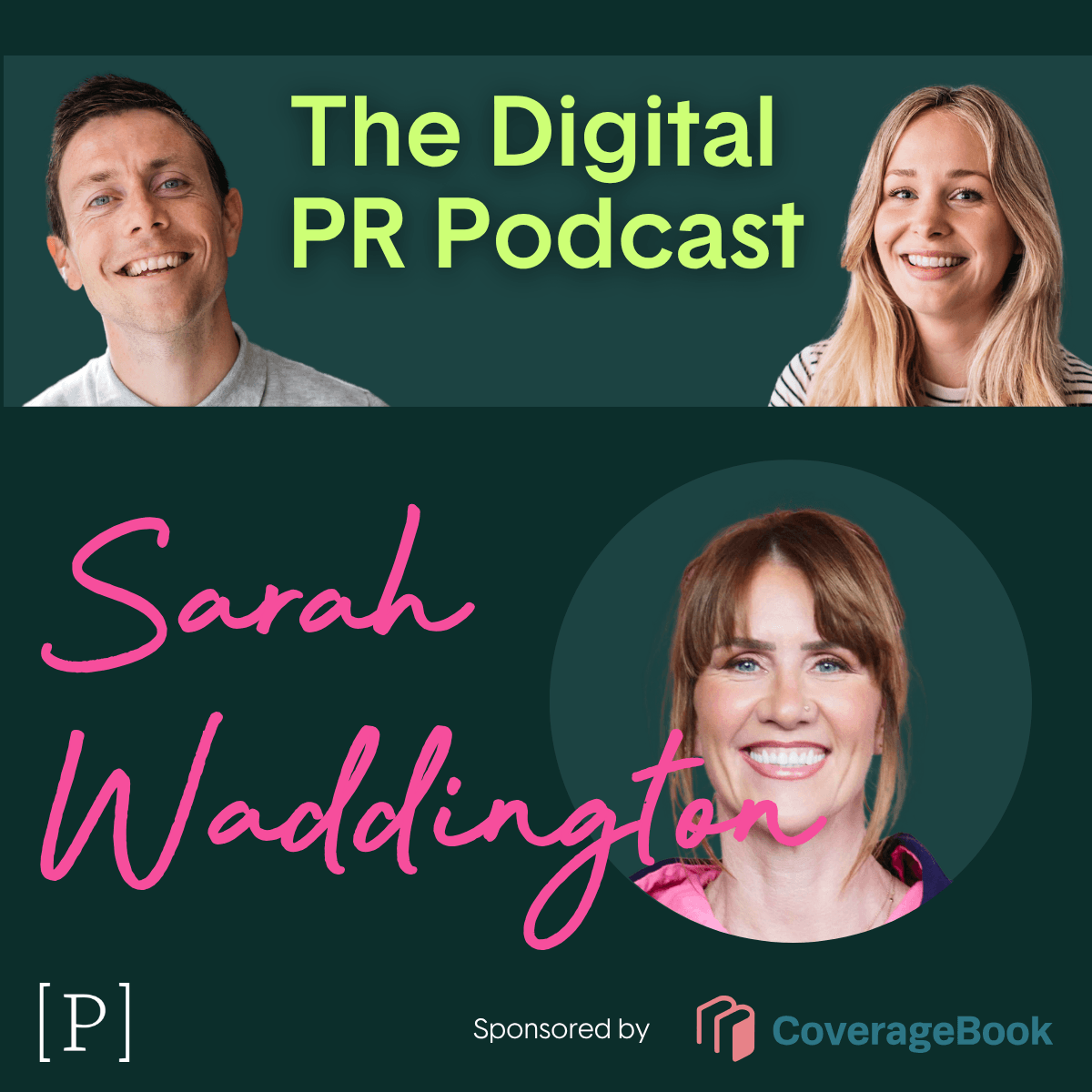
Steve and Lou are joined by Sarah Waddington CBE, CEO of the PRCA, the world’s largest professional body for PR, public affairs and communications.
They discuss the state of the PR industry in 2026, from the rise of fake experts and the case for unified professional standards, to why the divide between digital and traditional PR needs to go. Sarah shares the story behind her debate with Sir Martin Sorrell on Radio 4, and the new PRCA definition of PR that followed.
They also get into the industry’s ongoing diversity and class problem, what AI really means for practitioners, and why Sarah believes this is one of the most important moments in PR’s history.
Have a listen or read the full transcript below.
Steve: Today we’re joined by Sarah Waddington, our first CBE to be on the podcast. Sarah is the CEO of the PRCA, the world’s largest professional body for public affairs, PR and communications. She’s had an incredibly impressive career in PR to date, championing women and diversity in the industry and ensuring PR is seen as the impactful discipline it is. We’ll be talking about everything from fake experts to that Martin Sorrell conversation. Welcome to the podcast, Sarah. Thank you so much for joining us.
Sarah: Thank you very much for inviting me on. It’s a pleasure to be here.
Louise: Lovely to have you. Steve kind of touched on it a little bit, but you have worn a lot of hats in your career up until this point, non-exec director, coach, activist, podcaster, I could go on. If you were going to meet someone who didn’t really know what PR was, what exactly would you say that you’d done?
Sarah: I used to cut to the quick and say professional advisor or management consultant, because when I was doing the non-exec roles it was a much easier shorthand and people kind of got their head around that. Now I talk about being in the reputation business, because fundamentally that’s what we do, isn’t it? We help organisations manage their reputation and de-risk. And if you talk about it in those terms, it’s much easier for people to get their head around. And it also moves us away from that media relations debate that no doubt we’ll get into.
Steve: We’re really keen to talk to you, Sarah, about your work with the PRCA. You’re CEO of the PRCA. What is on your to-do list? What are you looking to achieve this year and beyond? You’ve already done a lot of things, but just tell us what you’re planning.
Sarah: It’s a big role and I know it’s a real privilege to be in it. As a trade association, it’s really important that the sector has appropriate representation, and so that is really the guiding mission. Everything we do at the PRCA is about raising understanding and awareness of public relations and then increasing investment in our services. I really see a massive opportunity for public relations and public affairs at the moment.
We’re in a very fractured society. Our role as strategic communicators is to broker understanding between disparate groups. It doesn’t have to be agreement, but understanding. And if you look around any continent right now, our work has never been more needed. Trust is pretty much broken. If you read the latest Edelman report, that was really quite stark reading and quite scary, really. But it means that fundamentally for us, what we do in terms of creating relationships and building trust is ever more important. And so my mission is to get the PR word out there. This is where the investment should be, and this is how we can help.
Louise: And it’s a bit of a stark time. You’ve got what’s happening in the world full stop, you’ve got AI. Do you ever feel a little bit overwhelmed with what you’ve taken on?
Sarah: Yes and no. It would be very easy to get overwhelmed and think you can’t do anything because everything just feels a bit too big. My friend always says to me when we chat about this: how do you eat an elephant? Bite by bite. And it’s exactly the same approach, really. When you get a laser focus on increasing investment in our services, that’s not difficult to build a work plan around.
At the PRCA, we are working hard to put a value on what we do. Earlier this year we commissioned CBI Economics to do some research for us, which for the first time will give us an idea of the value to the UK economy. And I think that’s really powerful when we engage with policymakers. I’m already saying: look, you need to take us seriously. We’re credible players. We can help with reputation, with understanding, with brokering trust. And this is how much we’re bringing into the economy. That gives us yet another starting point for serious conversations.
So it’s quite an exciting time. And AI, I see it as an enabler. We’re a people business. People buy people. You hear that saying all the time, and it’s fundamentally a truth. AI is a technology and it will still need human insight. For me, it’s about how do we help the profession embrace that change and understand the power it has, but do that ethically with the appropriate guardrails in place. And we have a fantastic community at the PRCA, some absolutely brilliant volunteers, all of whom are domain experts. I’m grateful for them every single day because they help us drill down into specialism and take us forward. So it’s not all on my shoulders; it’s a community effort.
Steve: How does the volunteering at the PRCA work? I think quite a lot of our listeners might well be interested in that. If people wanted to get involved, is there an easy opportunity to do so?
Sarah: Sure. It starts with membership, a lot of people use it because they want to give back, but also because they want to build their credibility. When you become a member, we have a strategic objectives form that we ask new members to complete. It helps us understand where that business or organisation is in its own life cycle and what its needs are, and then we can connect them up and match the specialism.
You can use membership very much as a platform-building opportunity, to get on our podcast, to speak at our events, to provide blog content or reports. But the opportunities go way beyond that. We’ve got members now driving our new business advisory service, which is led by our fellows. Our fellows provide professional advisory support to those who need it, whatever that need might be, whether you want to grow, go into international markets, or think about succession planning.
People sometimes say PRCA membership is a big investment, but the way we’ve built the member value proposition, I’d almost say it’s a false economy not to be part of the organisation now. We’re there to provide everything you need to navigate this turbulence that everybody’s experiencing, but also to ride through it and hopefully grow.
Louise: A former guest on our podcast, Stephen Kenwright, who has worked in the digital PR industry, did a talk, I think he shared it on LinkedIn, where he was saying how he feels one of the best things a digital PR agency can do is be part of a body like the PRCA. He was linking it to what’s been going on around fake experts and PR professionals being called out for doing questionable things, often using AI. Having that credible body behind you is going to become more and more important. On the fake experts story, the PRCA put out a statement. If you want to share any further thinking on it, that would be interesting, because it was such a big moment in our industry.
Sarah: Thank you to Stephen, may that long continue, Mr Kenwright. Fundamentally, I think there are a few things to break down here.
There is a real reputational threat to the industry, to the whole industry. It’s a very small number of bad actors who are poisoning the well, but all the good practitioners are being impacted by this. And that distinction matters. The very good people I’ve been speaking to at the Digital PR Summit, through an introduction from Stephen actually, are there because they’re interested in professional development and they’re doing excellent work.
A lot of the benefit of PRCA membership is, like you say, the credibility, because you have to sign up to a code of conduct. If you do public affairs, you sign up to two. And the other thing is that we get better representation, including from across the regions, not just from different disciplines within public relations. I’d love to have a more cohesive, representative voice. I think there’s an element of the digital cohort that hasn’t really been part of one big coherent community before, and we need to break down those silos.
I don’t like the term digital PR, and I know this is going to be contentious. I think it’s a nonsense. PR is PR. The people coming to the summit, I think they’ll be doing what anybody else in PR would consider themselves to be doing: providing good strategic, ethical, honest advice according to the business need. The tactical execution just depends on the organisation’s requirements.
I’d love to see the digital community uniting with us so there is a bigger voice. We’re all looking to achieve the same thing. We want to see our organisations succeed, our own, but also those people who are employing us. We’re all in this together, and what we need is a very strong, unified voice telling people why they should be hiring us and the good that we can do.
Steve: Do you think there has been that silo? Because we’ve both come from what you might call traditional PR into digital PR, and we’ve definitely seen it. Why do you think it’s been siloed, Sarah?
Sarah: I just think it’s been about the pace of technological adoption. Some people have grasped an opportunity quicker than others. It also depends on where you’ve been in terms of tactical execution. Some traditional PR people have said, I don’t necessarily do media relations or digital PR in that sense, they’ve been doing the professional advisory role, futures and foresight work, crisis management. It just depends which area you’ve been specialising in.
But I think the pace of change now is such that it’s a much more level playing field. Almost everybody has got their head around new technologies and is embracing them. I just feel like we are at a moment of significant change and significant opportunity. And this is why I’m keen to do the unifying role, because if we come together and really get people to understand what it is that we do, we don’t need these internal names at all. It’s one and the same thing.
Louise: Do you think that what we call digital PR, the link between SEO and PR that started to bubble up about ten years ago, caused this silo effect? And now with GEO, is there a new unifying moment?
Sarah: That’s a really good point. Nobody wants to be seen as the person emailing for a backlink, do they? Let’s be honest about it. Nobody in PR wants that to become what they think their job is. It might be a part of the job, but actually the job is much, much bigger. And that’s why I keep pulling the focus up and away from a tiny aspect of the role.
GEO is a really interesting one, and we’re doing quite a bit of work around that at the PRCA. It looks like the LLMs are prioritising owned and earned media, which is an absolutely fantastic thing for the public relations industry. We just have to tread with care, because at the moment there isn’t a huge amount of data to back that up, and it doesn’t take much for an overnight change to throw that into disarray. But I genuinely believe it to be the case from everything I’m reading.
We are right now writing to procurement bodies, membership bodies, and directors to say: you really need to be thinking about the briefs you’re putting out in this LLM world. The way content is churned and prioritised means your reputation monitoring needs to be better than ever. And who are the people to do that? That’s us. So wherever you’re putting your money, you might want to think about moving that marketing brief into a public relations brief. I really think it’s a great opportunity, but with a note of caution. We just have to tread gently and with care.
Steve: Definitely. There’s so much going on and it changes almost every day. I’m keen to get your views on someone just starting out in the PR industry, they’ve joined an agency or maybe studied PR at university. What do you think the future looks like for them? A lot of what we hear about AI is that it doesn’t necessarily help the career ladder, that it could cut junior jobs. I don’t necessarily believe that, but I’m interested by the lack of thoughtfulness from some agencies. What are your views?
Sarah: People love the path of least resistance, don’t they? They see a new technology and think: great, shiny new thing, I can cut costs. But it’s not the way. If you think about the workforce of the future, we’ll still need to be driving AI, but you need someone who understands how to do that, how to create good content, how to write the most appropriate prompts, how to test what’s coming back from the LLMs.
For me, it’s another note of caution. It just depends on what you want the people coming into the business to do. But if you’re thinking about where I believe all PR should be, strategic advisory, they need business and management skills. They’ll be digitally native anyway. We need to teach them what good content looks like, what reputation means to a business, how quickly businesses can lose value. Risk preparedness, crisis management, futures and foresight work, none of that has necessarily been run of the mill for our graduates or early career people, and it certainly needs to be now.
One of the things I hear most from agencies is that they don’t see people with the new business development skills that are required. As an industry, we need to understand the direction of travel and make sure the people coming in are adequately prepared. At the PRCA, through our Ofsted outstanding apprenticeship scheme and our growing training offer, we’re making sure people can get business and management courses from the off, not just as they grow. We’ve also just done a partnership with the IOD for more senior people to get the governance and company direction elements. But it’s just got to be a bit more thoughtful. The goal is to transition to higher-fee-earning work, the consultancy element.
Louise: You touched on training and making the best PR practitioners. But I know you’ve also done a lot of work on gender within the PR industry, pay gap, women returners. How have things changed? Do you feel positive about where you’ve come from in 2014 to now?
Sarah: It’s a difficult one. I would like to say we’re further along than we are, but we’re not. Back in 2014, I was on the board of the CIPR and they were very keen to look at gender policies and the gender gap generally, not just the gender pay gap. I did quite a lot of work with that, and as I became CIPR president, I was looking at industry data regularly in a way I hadn’t before. And I personally got very frustrated.
If you were to meet me now, you might think I’m very nicely middle class, but that’s not my background at all. And I had many challenges when I was growing up. I’m a big believer in leaving the ladder down. What I was seeing and reading, and what continues to be reflected in different reports and the PRCA census, is that PR has for a long time become a bit of a closed profession unless you’re white, well-networked, pretty middle class, and have someone who can sponsor you. I’ve always found that a real bone of contention.
And that’s amplified for me by the fact that we have some absolutely fantastic initiatives working hard to solve some of the big issues. There’s the Asian Communication Network, Blackcomms, CICI, which I co-founded with my husband Steve, and Socially Mobile. Women in PR, so many. We actually met about this time last year to say: we’re all doing great work, but why is this not having a bigger impact? And so that’s something I’m looking at at the PRCA right now. We’re going to create something called a Sector of Solidarity, bringing all that great work together into one central home, so we become a sector known for its inclusivity.
You touched on gender. Through Socially Mobile, we published a report called Missing Women, which talked about 4,000 women who have left or failed to advance in the industry because they can’t get the support they need. And that’s wicked. The report found cultural, structural, and societal issues behind that, a boys’ club mentality, the devaluation of PR as being seen as soft work, limited development pathways, poor maternity support, inflexible working patterns, and women often carrying the heavier caregiving responsibilities. Not just downwards with kids, but upwards as well, I’m fighting perimenopause myself, on top of caring duties in both directions.
There are still many issues. I think if you were to talk to lots of female directors right now, they’d still recognise all of that. Through Socially Mobile, we’re creating a little army of people from lower socioeconomic backgrounds going into new leadership roles and creating teams in their likeness. That feels really good. But it continues to be age-old issues for our minority ethnic colleagues, who might get into a role but don’t have progression opportunities, or they get stuck. And we know there are huge amounts of data showing that fully diverse teams perform better commercially. So it’s not just the right thing to have, there’s a whole commercial imperative behind it.
Hopefully the Sector of Solidarity initiative, launching later this year, will bring all those fantastic initiatives together under one roof, a home where people can be signposted to the support that’s available, and where we can look at the gaps and provide more solid intervention to drive meaningful change. I’m grateful to everybody who’s agreed to be part of it, including the CIPR. It needs a sector-wide response. It’s not something any one initiative or organisation can do on its own.
Louise: That sounds great. So those groups, like Women in PR, for example, they’d all be part of that?
Sarah: Absolutely. We’re just looking at how we do that, probably looking for some sponsorship to build a website and create some kind of creative approach. There’s a limit to what we can do within the PRCA alone. So if you know anybody who might be interested in supporting, they’d be very welcome to have a conversation with me and the team.
I think it’s one of the big goals right now. We’re at a point where there are a lot of bad actors, a lot of right-wing rhetoric, a lot of people feeling very frightened. And if we as professional communicators don’t take a stance, who’s going to? There’s a way we can show that you can stand up to racism and bigotry in a way that’s meaningful but also safe, because we always have to keep safety front of mind. We don’t want reprisals for anyone working within this, and we don’t want it to become too politicised either. We’ve been talking to different organisations who have been impacted by taking a voice and then getting a pile-on. We just don’t want to go down that route if we can avoid it.
Steve: Usually we do this at the end of the show, but if people wanted to get in touch — whether to support that initiative or anything else, the best way would be via LinkedIn?
Sarah: We would love to hear from people, because this is really, really important. I’m on LinkedIn regularly. And hopefully I won’t regret this, but I’m [email protected], that’s probably the fastest way. I’d be really grateful for people who find this interesting and might be able to help, particularly with getting a web build. Just having somewhere we can house everybody’s details would be a wonderful step forward.
Steve: Thank you, Sarah. And thank you for being so honest, candid, and forthcoming on all of those things, it’s hugely important. As you say, if we’re meant to represent society and we’re not doing that within agencies and within the industry, then how can we?
Louise: We wanted to speak to you more about PR, the definition of PR, and the reputation of the industry. You debated PR with Sir Martin Sorrell and followed up with a new definition of PR. For anyone who missed it, can you tell our listeners what that definition is and why you think PR is often misunderstood?
Sarah: Yes, and that story still rumbles on. I noticed PR Week have got another update from mine and Sir Martin Sorrell’s conversation on the radio before Christmas.
For anybody who missed it: I ended up on Radio 4’s Today programme, expecting to talk about the rise of storytelling, which has increased in mentions in job descriptions. It was supposed to be a very simple chat with Sir Martin Sorrell, where he’d talk about it from an advertising perspective and I’d talk about it from PR. I’m grateful to one of my PR and comms board members who sent me a little note beforehand saying he hoped Sir Martin wasn’t thinking of being too cantankerous. I hadn’t even thought about it. I know Sir Martin Sorrell by name and reputation only, I’ve never met him. But I’m glad he said that, because I went onto the radio being a bit more prepped. Just as well, because Sir Martin basically said that PR was dead and everybody should just flood the internet, spend your money on paid content. Which, obviously, I contested quite hard.
But it was really good, because he did me a massive favour. A lot of the work we were doing, which was having cut-through with members but not much wider, then became very visible because it sparked an industry debate. LinkedIn was red hot. And I still get messages from people saying, I heard you on Radio 4, video is not dead, everybody still listens to the radio! Got such a shock. But so what was really useful was that I could start to talk about where we believe the future of the industry is. We do think it’s in that higher-value advisory piece, with all the good stuff underneath it. You can still do all the delivery, but where do we want to be? We want to be advising management teams to help them de-risk their business, take ethical decisions, and protect their reputation.
One of the things I wanted to do, because Sir Martin, like a lot of people, conflates PR with media relations, was deal with this once and for all. There are good PR definitions out there; the CIPR one is very good. But for me, it speaks to the industry rather than to anybody externally. What we were trying to achieve was a definition that anybody in business would understand and think: actually, yes, now I understand what their role within our organisation would be.
So we went out and did a member consultation, quite contentious, because people wanted to have a voice on it. But it’s a really big job. I wouldn’t dare to speak on behalf of the wider industry without making sure we were serving our community and that they had something they could use efficiently.
Where we landed, I won’t read the extended definition because it is a little bit longer, but please do go and look at it, is that public relations is the strategic management discipline that builds trust, enhances reputation, and helps leaders interpret complexity and manage volatility, delivering measurable outcomes including stakeholder confidence, long-term value creation, and commercial growth.
And I think that’s really important, because we’ve shied away in the past from talking about the commercial value that we bring to businesses. That’s where advertising has done really well, you spend this much, we’ll deliver this much in sales. We’ve all been a bit scared to do that in PR and just haven’t thought about what it means. If you think about this VUCA world, businesses are really, really struggling, and they need people like us with sensible business heads and an ethical compass to say, how do we navigate this turbulence? What does the future look like?
But back to everything, it’s about the trust element. Right now, people want partnerships and relationships with people they trust. And that trust is really hard to get. What we can do is create those relationships. It’s not just about customers who will buy one thing. It’s about the lifetime value we can bring. If through our brand work we engage with someone truthfully and consistently, they will come back time and time again. And you’ve got a bit of grace if you get something wrong and hold your hands up because that’s actually when you really do start to build trust. People think: actually, I believe in that company. It was a misstep, but we can forgive it.
I personally feel very comfortable about where our community landed. I’d be interested to hear what you both think.
Louise: There are a few key bits in the definition I particularly like. I really love the mention of measurement. From mine and Steve’s background, one of the really great benefits of linking PR with SEO, even on a smaller scale, is being able to show that PR work is getting real revenue benefits for an online business. Coming from a traditional PR background into this, that just opened my eyes to how much value PR could bring. Because you’re so right, it’s seen as a soft career, and it really isn’t. It’s incredibly valuable and can change what huge swathes of an audience are talking about day to day. I think that particularly speaks to a lot of people in the digital PR space. Sorry, I know you don’t like that term–
Sarah: That’s fine, you’re forgiven.
Louise: —but I think it speaks to us particularly, because it’s something we can feel quite proud of.
Sarah: You’re right. SEO and digital people have done that better in terms of linking immediately to commercial outcomes, and that’s really important. But fundamentally, what we’re saying is about credible two-way engagement that shapes perception, influences decision making, supports behaviour change, and builds commercial revenues. But what we’re also trying to do is drive societal and economic impact. And I do think that’s a big differentiator from paid content and advertising, which is just flinging money at one commercial aim.
So I see this as a very clear mission. We can do all the good tactical stuff, but fundamentally where we need to be is up the value chain, closer to management consultancy. That is the big opportunity. And that’s what I will bang on about forever, because that’s the sweet spot. This is why digital, SEO, traditional, whatever you want to call it, we all need to unite together. That’s the story we should be telling collectively, all supported by a code of conduct like the PRCA’s, so people know that the rigour and the commitment to CPD is there. If we get this right at this moment in time, with this AI transformation, with the needs of the world at large, I think this industry could be completely transformed. It’s a scary place but a very exciting one, and it needs everybody to back the mission.
Louise: I think it’s really interesting with the AI side of things. I remember when ChatGPT became more widely used and everyone started to think: this is actually very good. And then the conversations around losing our jobs, it did rock me for a bit. Where is PR going to be in this? But over the last couple of months there have been such interesting studies around how those third-party references to your brand and your reputation are so important. It’s such an exciting time.
Sarah: There’s no longer fish and chip paper, is there? Remember the days where you’d go, oh, it’ll blow over? That’s just not going to work the same way. So if you’re not doing that audit, not correcting misinformation, not making sure your narrative is factual, that’s all really within our wheelhouse. You need good actors, ethical people who are going to do that. And this is why PRCA membership is so important, because we’re policing that. At this moment in time, it could go really, really well, or it could go really, really badly.
Steve: Absolutely. I loved the point you made at the start about Sir Martin Sorrell conflating PR with media relations. Since I’ve worked in PR, when I try to describe it to people, they just think it’s like writing a press release and sending it out. It’s a really difficult discipline to get right, not just to tell a story, but to find the right story, to give the right consultancy, the right strategic advice. You said scary and exciting, and I kind of live for that right now. And you’re fully embracing it, Sarah, and putting it at the front of your mission for the PRCA. Which is wonderful.
Sarah: Thank you. The more we think about PR as a strategic management discipline, the more it focuses your mind on what we need to know and the skills required. The media relations element is not going to go away; the SEO bit is not going away. Those are all fundamental parts of what we do. But they’re a small element of it when you start to go up the chain, and it just creates so much more opportunity.
When people are feeling frightened right now, and many people are, because of AI, because young people are looking at it and feeling scared for their future, because agency bosses and in-house people are going through this existential crisis of what does this mean for the team, it doesn’t have to be that way. It really doesn’t. It’s additive, if it’s used in the right way and if we move upstream. That’s the key thing.
And back to what we said earlier about fakery and the poison in the well, we need to separate ourselves from that. We also need the media to invest in doing the right checks. I feel for the media, because the investment that’s lacking in newsrooms these days is tough. But we need those people holding power to account and scrutinising things appropriately. We need to work in lockstep with them. And we always will, the synergies between both industries are fundamental. So it’s a fascinating, tricky, fast-moving time. We’ve got this, right? We’ve got it.
Steve: We do. I’m keen to ask about your CBE for services to PR and the voluntary sector, it is an extraordinary achievement, and you’re the first CBE on the podcast. What did that moment feel like personally?
Sarah: It felt wild, and it still does. And I’m proud of it. I use it against my name because I also think that if someone like me can get that, anybody can and I want people to know that.
It’s interesting, because it’s never been anything I had in my head. You know how some people have very clear goals? I’m not like that in terms of accolades. I’ve always just had outside interests beyond the role, and I did things that had a twofold benefit, they put something back into society, which mattered to me, but I also knew I would grow from them. I became a charity trustee because I wanted to get boardroom skills; I was helping others and developing myself at the same time. I created a community called Future Proof, all about democratising learning. And of course, Socially Mobile. These are just examples of things I’ve done to try and give back.
But the moment itself was astonishing. It was during COVID. I was sitting at my desk, right here, actually, about six o’clock at night. We’d unfortunately been having some problems with a stalker and the Met police were involved, all sorts. And I got this email with a very odd subject line. I thought, FFS, it’s this person again. So I stomped into the kitchen with my laptop and said to my husband, who was over the hob: look at this. And then when I looked at it again, I said: hang on a minute, this is something completely different. And then I read the letter. And it said CBE. It was just… I’ll never forget that moment.
I’m really grateful to all the people who took the time to write in and give references for me. And then finding myself in a room with Chris Whitty, Tom Daley getting his MBE, how does that work? Absolutely crazy. But very special, and I’ll always be grateful.
Louise: We do have one final question. Is there anyone in the PR industry at the moment who genuinely excites you? People, agencies, brands doing interesting and exciting work you’d like to shout out?
Sarah: As a PR, it’s a bit like being a parent, you can’t have a favourite. So I’m going to go with the slightly clichéd but genuinely heartfelt option: my husband, Stephen Waddington. On top of having had a really successful career in public relations, we met via the CIPR, so thank you, CIPR, he is, on top of now running a successful professional advisory business for creative agencies, doing his PhD. He’s looking very much at the future of public relations and what it needs. All while managing a very turbulent and challenging family life over the past four or five years for lots of different reasons. He’s held that all together, run the business, managed me, jumped in when I took on this big role, and he’s still delivering a PhD.
The body of knowledge he’s creating to take the industry forward, I just think is incredible. We have very boring but fascinating conversations at the dinner table, I’ll tell you that much. But yeah, his work ethic is second to none, and the industry will be better for the work he publishes in a year or so’s time.
Steve: I love his newsletter on a Monday. That’s one of my weekly reads. So very well deserved.
Sarah: The number of people saying that everywhere makes me laugh. When I first got into PR in the capital, we’re based in Newcastle, and I’m in Newcastle today, everywhere I went it was: oh, you know Stephen? And now everywhere he goes it’s: oh, you know Sarah? A complete reversal. But we laugh about it. And I’m glad you’re reading his Substack.
Steve: Very, very good. Sarah, thank you so much for joining us on the Digital PR Podcast. It has been an absolute pleasure from start to finish, hearing about your inspiring career and your brilliant work at the PRCA. Just to reiterate how people can get in touch, if they want to hear more about your work, support any of your initiatives, or if they’re working in agency leadership and want to become a member, they can find you on LinkedIn. And your email one more time?
Sarah: For new members, absolutely! [email protected], or [email protected] if you’d rather go to the team directly. Everybody is really welcome. Come and help us get behind the mission and create this unified voice, because I think that’s the way to really achieve change at scale. And thank you so much for having me. It’s been a joy. I know I’m very earnest about all of this. I’m a bit of a bore when it comes to it. But it matters, and it matters right now.
Louise: No, it’s been really great and really interesting to hear everything you had to say. Thank you so much for joining us.
Steve: Thank you, Sarah. Thank you.