Why OOH Advertising is Evolving – And Why That Matters for Ambitious Brands

Lily Robertson-Ward
29 October 2025
Remember when out-of-home (OOH) advertising meant static billboards, bus stop posters or the side of a phone box? It was a powerful medium, but one that felt slow, expensive, and the domain of big-budget brands. That perception couldn’t be further from the truth today.
OOH has quietly reinvented itself. It’s now one of the most progressive spaces in media: digital-first, data-led, flexible to buy, and far more measurable than many marketers realise. In a world where trust is fractured and attention is fragmented, outdoor is forging ahead with innovation – and the results speak for themselves.
In 2024, the UK OOH sector generated £1.4bn in revenue, a 7.7% year-on-year increase. Digital formats now make up around two-thirds of total spend, growing more than 10% annually. Nearly a third of campaigns are traded programmatically – and that figure is only rising. These aren’t signs of a legacy medium. They’re proof that OOH is evolving at pace.
Democratising access
Historically, OOH was reserved for those who could commit to big campaigns months in advance. But programmatic buying has changed the game.
Brands can now buy impressions flexibly, test activity in specific locations, and optimise in real time. It’s possible to start small with a geo-targeted trial, then scale what works. That means ambitious challenger brands can stand shoulder to shoulder with household names, and even outperform them creatively.
OOH has gone from high-barrier to high-potential: a space where ideas, not budgets, lead the way.
Smarter, more responsive creative
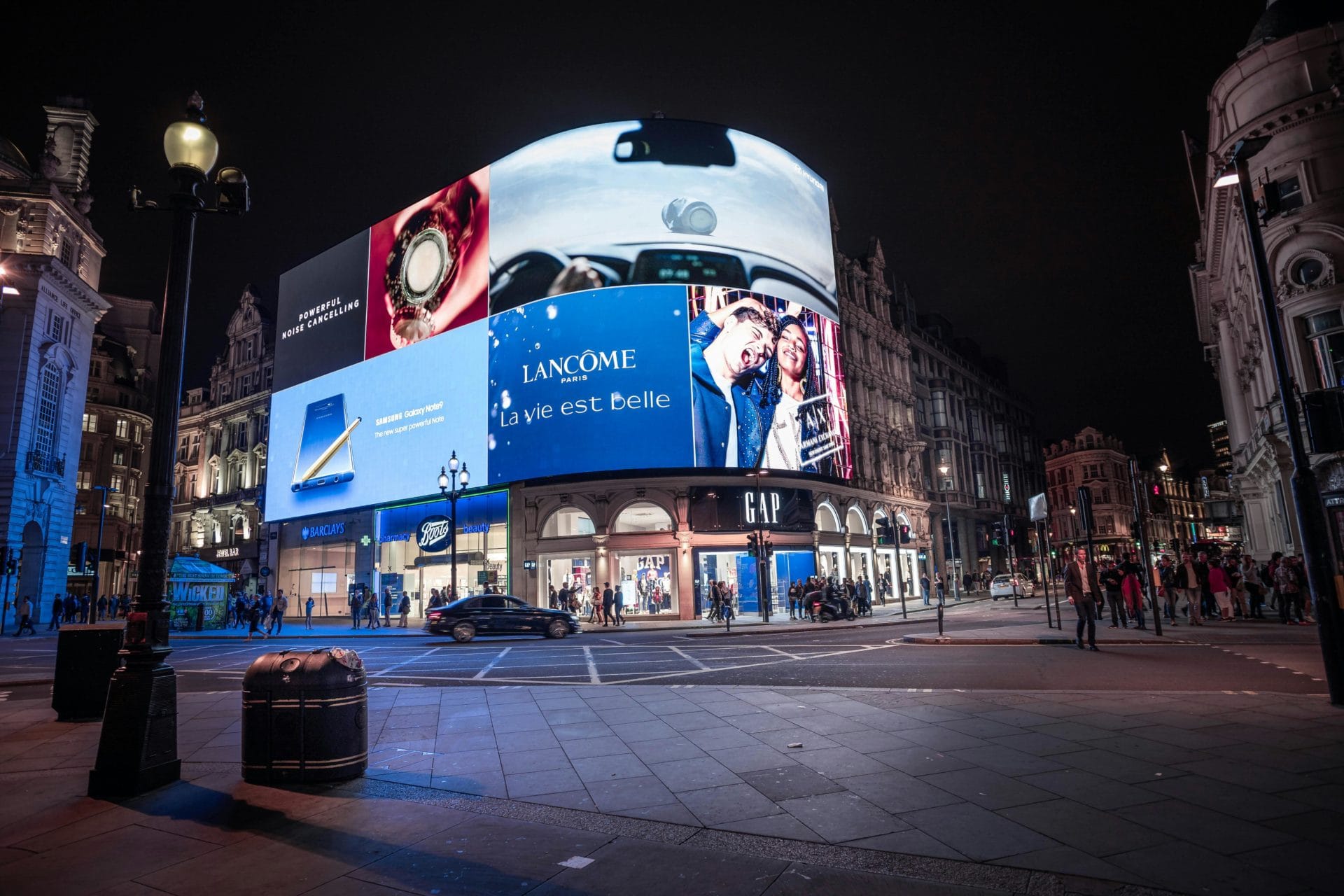
Today’s digital screens aren’t static. They respond in real time to context, powered by live data feeds like weather, traffic, or even the time of day.
A coffee brand can serve up flat whites to commuters in the morning and switch to iced lattes by lunchtime. A travel operator might showcase sunny beach scenes when rain hits the forecast, then pivot to city breaks when the sun comes out. It’s smart, responsive storytelling that adapts to the real world.
This dynamic capability gives OOH the edge in contextual relevance. It meets people in their moment, turning passive visibility into an active connection.
Brand AND performance
Measurement has long been a challenge for OOH. Traditionally seen as great for awareness but harder to prove impact, it’s often overlooked in performance-focused plans. That’s changing fast.
Modern OOH can now link exposure to digital outcomes: website visits, footfall, engagement, and even sales. Programmatic platforms track impressions in real time, while modelling helps prove the wider impact across the funnel. It bridges the gap between brand-building and performance, which is something few other channels can claim at scale.
Where next?
In a landscape shaped by automation, AI, and data integration, OOH is no longer playing catch-up but setting the pace.
From more accessible buying models to ever more responsive creative, and smarter measurement tools, outdoor has reimagined its role in the media mix. Far from being a relic of the past, it’s now one of the most exciting places for brands to tell their stories.
If you’re curious about how to make the most of what OOH has to offer, get in touch.