What’s New in Paid Media: February 2026

Nicolas Rentschler
10 March 2026
Paid media never sits still. February brought a handful of updates that hint at where platforms are heading next, especially when it comes to automation, creative formats and the future of advertising in AI-led search.
Here are four changes that caught our attention.
1. Google replaces Lookalike audiences in Demand Gen
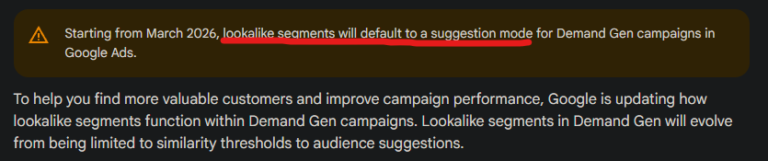
Google is moving away from traditional Lookalike audiences in Demand Gen campaigns.
Instead of manually defining expansion audiences, advertisers now provide audience signals. These signals help Google’s AI models identify and scale towards similar users automatically.
In practice, this means:
- Less manual audience building
- Greater reliance on Google’s machine learning
- Campaigns optimising based on signals rather than fixed segments
This change is another sign of Google steadily shifting towards automation-first campaign management. For advertisers, the challenge will be ensuring the right signals and first-party data are in place so the system has something meaningful to learn from.
2. Microsoft launches multi-image Shopping ads
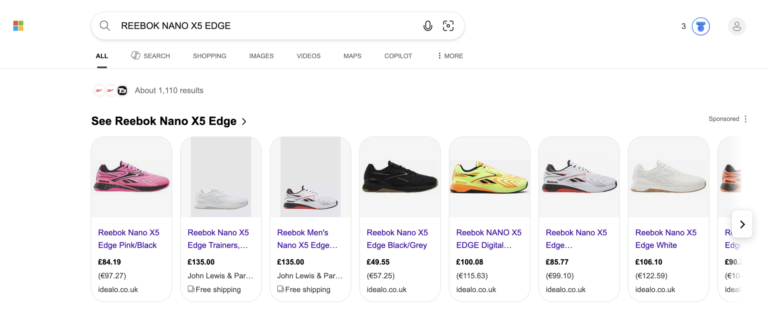
Microsoft Advertising has introduced a new multi-image format for Shopping ads, allowing multiple product images within a single ad unit.
Previously, Shopping ads typically relied on a single image from the product feed. The new format adds more visual depth and creative flexibility.
The potential benefits are fairly clear:
- Products can be shown from multiple angles
- Lifestyle imagery can be included alongside product shots
- Ads become more visually engaging in the search results
It is a small change on the surface, but one that could improve click-through rates and help brands tell a richer product story.
3. Perplexity pauses advertising tests
AI-native search engine Perplexity has paused its early advertising experiments while it reassesses how ads should fit within the product.
That decision highlights a bigger question facing AI search platforms: how do you monetise conversational search without damaging trust or the user experience?
Traditional search advertising relies on clear intent signals and familiar ad placements. AI-generated answers change that dynamic entirely. Platforms like Perplexity are still figuring out how advertising can exist alongside AI responses without undermining the value of the product.
It is likely we will see more experimentation here before a clear model emerges.
4. Shop visits now available in Google Ad Grants
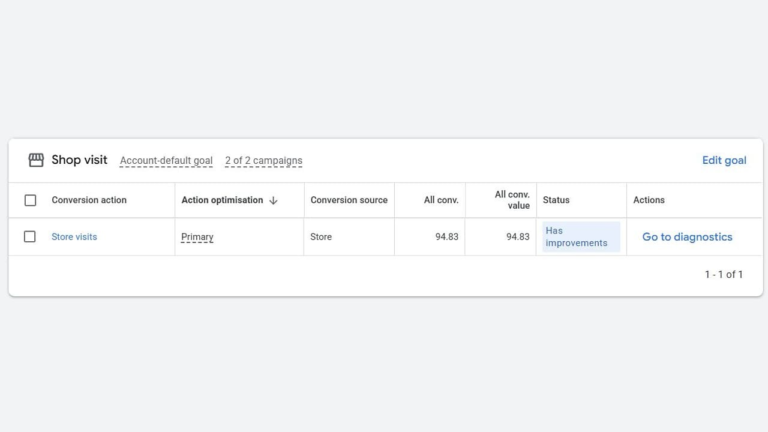
Google has also introduced shop visits as an account-level goal within Google Ad Grants.
This allows eligible non-profit organisations to measure and optimise campaigns towards in-store visits, not just online conversions.
Ad Grants often fly under the radar in the wider paid media conversation, but updates like this are genuinely useful. For charities and non-profits with physical locations, it creates a clearer link between digital campaigns and real-world impact.
What this tells us about the direction of paid media
Taken together, these updates point to a few clear trends:
- Platforms are leaning further into automation and AI-driven targeting
- Creative formats in shopping and performance ads are expanding
- The monetisation of AI search is still being worked out in real time
For advertisers, staying curious and testing new features early is often where the biggest opportunities appear.
If you’d like to talk about how these changes could affect your paid media strategy, get in touch with our team or explore more Insights below.