
Technology changes faster than human behaviour.
Audience understanding (motivations, anxieties, decision triggers) is what produces content strategies and brand positions that AI systems find worth citing.
You cannot reverse-engineer this from prompt data you cannot see.
The adoption gap
Most industry commentary on AI search is written by practitioners whose understand the implications of model updates and capability benchmarks.
But most consumers just know they’re “using ChatGPT.”
Strategy needs to reflect where audiences actually are, not where we are.
Task-dependent trust
Consumers may be comfortable using AI for low-involvement tasks, i.e. renewing car insurance, comparing broadband, but will likely retain a strong preference for human involvement in higher-stakes or emotionally charged decisions.
Understanding where a client’s product sits on that spectrum is essential.
Attitudinal variation
Significant segments of the population are AI-sceptical or actively opposed, varying by age, sector, and geography.
A strategy that assumes universal adoption will misread large portions of its audience.
Your audience might be deeply engaged with AI tools… but they might not. Start with who is using AI, how, and for what – not the technology itself.
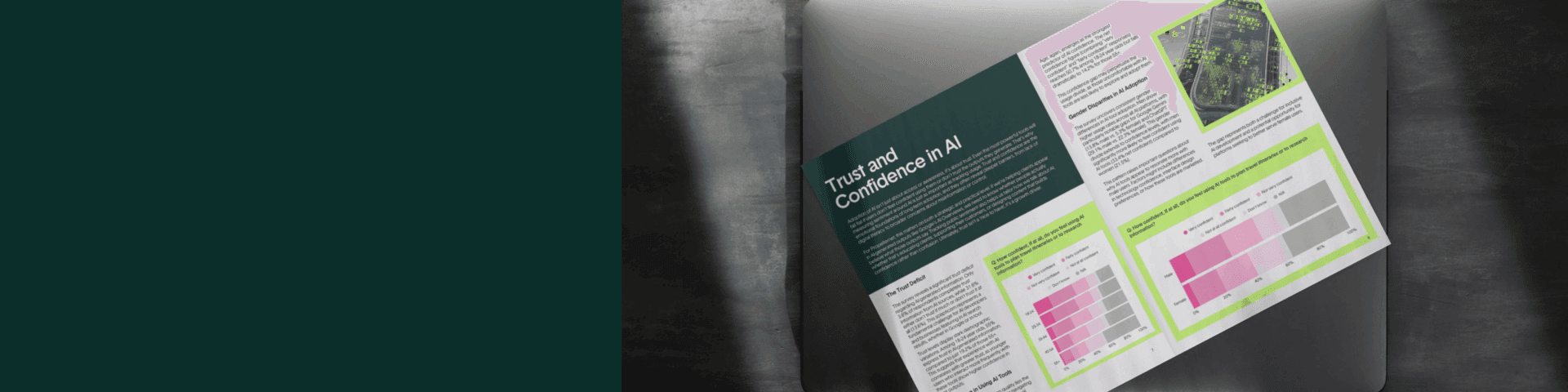
We’ve been surveying the general population on their attitudes to AI on a quarterly basis over the last year. Read our AI Pulse report to find out more.
Recommended reading
SparkToro: "How Much is Your Audience Searching Google vs. Prompting AI Tools?"
A useful reality check on AI adoption assumptions, and direct evidence that strategy must start with where your specific audience actually is, not where practitioners assume they are.
Dotdigital: "The State of Search in 2026 — A Discussion with Rand Fishkin"
Fishkin makes the case that AI adoption is uneven and audience-specific, with the most important strategic question not “how do I optimise for AI?” but “is my audience even using AI for this?”
Pew Research Center: AI adoption surveys
The most credible ongoing source for how AI adoption varies by age, income, education, and geography.
OpenAI/NBER: "How People Use ChatGPT"
The largest study of actual ChatGPT consumer behaviour ever published, drawing on 1.5 million conversations.