From Keywords to Conversations: Winning in an AI-First Search World With Audience-Focused Content

Sophie Coley
9 July 2026
It’s an interesting time to be in search and content. And when I say interesting, I mean confusing, exciting, scary. There’s a lot of change, and we’ve got to start thinking about doing things differently. Here’s some key takeaways from the talk I gave at brightonSEO back in the Spring.
We can’t start planning the way we used to
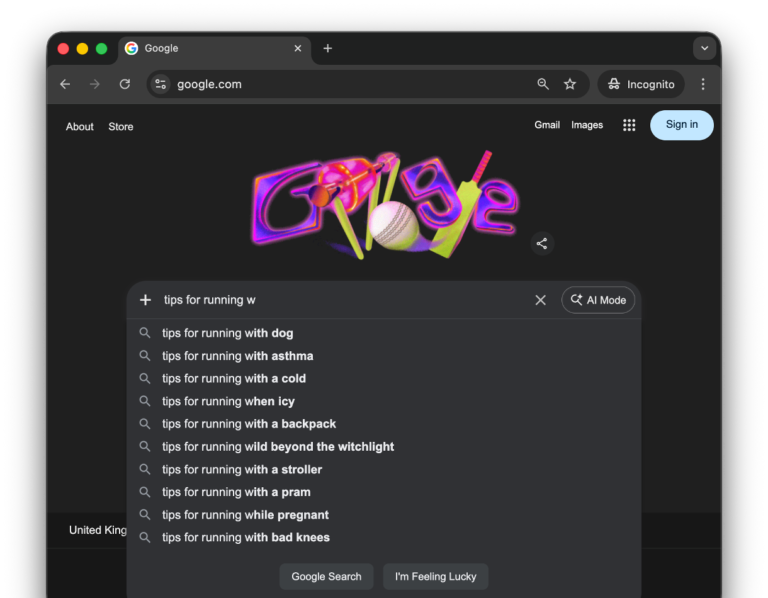
Most content or search planning starts with something like keyword research. The difficulty now that AI is such a huge part of what we do is that we can’t start in that same place.
It’s tempting to take the processes and frameworks we’ve used in traditional SEO and transplant them straight into AI planning. But it’s not the right approach, and here’s why.
Keyword data is trustworthy. Prompt data isn’t (yet)
We’ve all been spoiled having access to keyword data for so long, and we’ve become very reliant on it. Keyword data is predictable and fairly consistent, unless consumer behaviour massively changes or a new trend emerges in your category. The platforms share data with us, there are reliable third-party tools, and if you’re running ads, Google will share keyword data with you in Keyword Planner.
Prompt data, at this point in time, is much less trustworthy, and a much trickier place to start when it comes to content and SEO strategy. That’s because prompts aren’t the same as keywords. They’re highly variable and not particularly predictable. Two people with the same need might phrase a prompt completely differently.
Right now, it’s really only Microsoft sharing grounding query data in Webmaster Tools, and even that’s just a snippet, not the same level of data we get from Google’s Keyword Planner. There are third-party tools out there, but nothing with the same trusted, wide market as we have for SEO content planning.
Consumers are on a journey, and their prompting will change
We’ve all learned how to search Google. You grow up knowing that if you’re using Google, you probably need a few short, snappy words, not a whole essay. So you might search “best running shoes for beginners.”
If you’re turning to an LLM, especially as a beginner, you’ll probably take that Google-conditioned behaviour and transplant it straight in. We see search queries in LLMs that are still very Google-like, just transported over.
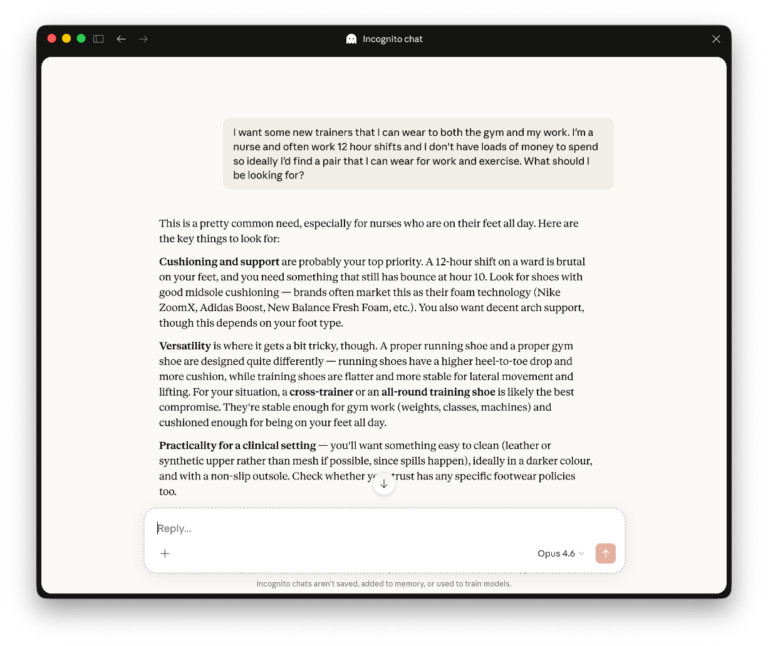
But there’s a journey here. As consumers get more confident with AI tools, they’ll understand that the more rich information they build into a prompt, the better the output. That changes how we need to think about the content we’re creating to optimise for LLMs and consumer discovery within them.
I’ve borrowed this language from Lily Ray, but it sums it up well: keywords are deterministic, we know what they are and we can measure them really well. Prompts are probabilistic. We’re all going to prompt in slightly different ways, even with the same need, which makes it hard to work with that data – so it’s best not start with prompt data when planning AI content.
The invisible personalisation problem
There’s also a level of invisible personalisation we’ll never be able to see. Say I’ve told ChatGPT at some point that I’m a big Adidas fan. If I ask for running shoe recommendations, chances are it’ll prioritise Adidas. Or maybe I’ve mentioned I have unusually small feet, or that I’m vegan. These are conversations happening entirely outside the specific running shoe journey, but they all get baked into the response the LLM generates.
This presents a triple problem for anyone planning content. We don’t really know what prompts people are actually using, and they’re too varied to measure with any consistency. There’s invisible context layered on top that we can’t see. Rand Fishkin’s study on the wildly different responses people get from LLMs shows just how inconsistent the output can be too. Put those together, and it becomes almost impossible to measure, let alone plan for.
Be careful with third-party “prompt volume” data
Some third-party tools present what looks like a silver bullet: prompt keywords or prompt volume you can use for planning. I’d suggest treating that carefully. Dig into where a lot of this data actually comes from and it’s often synthetic, not what people are typing into LLMs, but a mishmash of publicly available sources. Probably a fair starting guess, but not the same starting point that keywords give us.
There’s also consumer panel data. You might remember Hitwise, a tool that let us marry panel demographic data with search and web behaviour through Audience View. It was shut down in 2020 over concerns about where that data actually came from: the panel of people having their search and browsing behaviour anonymised and passed on to marketers weren’t really aware that’s what was happening. The parallel with prompt data feels relevant here. If a tool is built on people opting into a panel, how confident can we really be that they understood where their prompts were going?
People tell Google things they might not tell anyone else in their life. But think about your last ten conversations with an LLM. I’d bet at least one included something you wouldn’t be entirely comfortable with a marketer getting hold of. Before you build a content strategy on prompt data from any tool, it’s worth checking:
- Where does the data actually come from? Is it synthetic, from a panel, estimated, or just Google search data with a shiny new “prompt data” label?
- How big is the sample, and who’s in it? Even opted-in panels probably skew towards a certain type of person, and might not represent the audience you’re actually trying to reach.
- What’s actually being counted? Exact-match prompts, or broad topicality? Realistically, topicality is probably the only workable approach, since exact prompts will rarely match up.
- Can the tool separate search intent from generative intent? If it tells you there were 10,000 prompts about running shoes this week, does it distinguish “write me an article about running shoes” from “I want to buy some running shoes”?
- Would you be comfortable if your own conversations were in that dataset? It’s an ethical question we need to wrestle with as humans and marketers.
- Is the data telling you anything you couldn’t know by understanding your audience really well? This is the most important one for me. If you can’t prioritise by volume, what can you prioritise by? I keep coming back to this: if we understand our audiences deeply enough, volume data stops being so important, whether we’re talking about LLMs, Google, or our own website.
Audience facets: the building blocks of prompts
I spent a lot of the COVID year talking about Search Listening: taking consumer insight from search behaviour rather than fixating on volume, just the language people use and what they tell Google. That remains valid in an AI world. We can understand audiences by how they search in Google and think about how that evolves into AI.
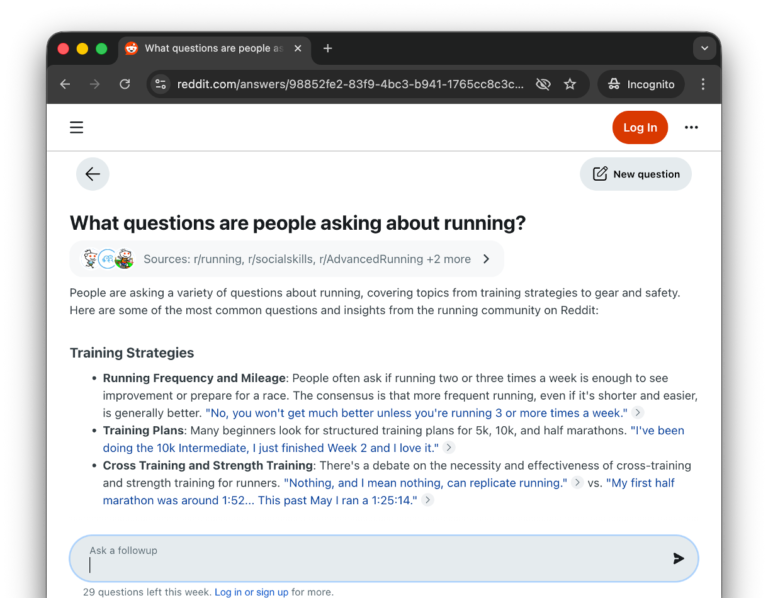
Reddit and forums are hugely valuable. Reddit Answers is a great tool for distilling a lot of information from Reddit quickly. If you’re operating in specific niches, reading the conversations in the relevant forums daily is a brilliant place to start. Reviews too, especially overlaid with demographic data. We’ve built genuinely great content strategies off the trends in reviews across different demographic groups.
What you’re looking for are audience facets, the building blocks of prompts. The more of these you understand, the more you can think about how Consumer A might combine different facets to Consumer B. Take this example: “I want to buy some new trainers that I can wear to both the gym and work. They’re a nurse, they work 12-hour shifts, they don’t have lots of money and they want something they can use for both work and exercise.” There are several details in prompts that present different audience facets:
- Needs e.g. protein-rich recipes for a new diet
- Lifestyle e.g. training three times a week, being vegetarian
- Situations e.g. recently changed jobs, commuting more
- Triggers e.g. a dress that didn’t fit the way they wanted – what sent them on this journey?
- Labels e.g. gym bunny, beginner
- Context e.g. late at night, hungry – what else is going on when they turn to the LLM or the internet?
I’d still advocate for traditional audience research, but think of these nuggets as the building blocks of prompts, a proxy for questionable prompt volume data.
From audience facets to content opportunities
Once you really understand these audience facets, it’s easy to extrapolate content opportunities from them. Take a review on a Nike product page from a nurse saying she uses the trainers for her night shifts: a genuinely useful insight that translates directly into a piece of content on the best trainers for work and the gym.
In the LLM world, the why matters as much as the what. Be specific about the reasoning behind your recommendations, because that’s what LLMs need to see. I ran a prompt through Claude about trainers for a nurse, and rather than immediately listing shoes, it explained she’d need cushioning and support, versatility, practicality for a clinical setting, and durability, before asking about budget and then making recommendations. Running prompts like this through LLMs and understanding that reasoning, even from a non-reasoning model, can help shape content to make it stronger for LLM discovery.
A tool to help you dig deeper
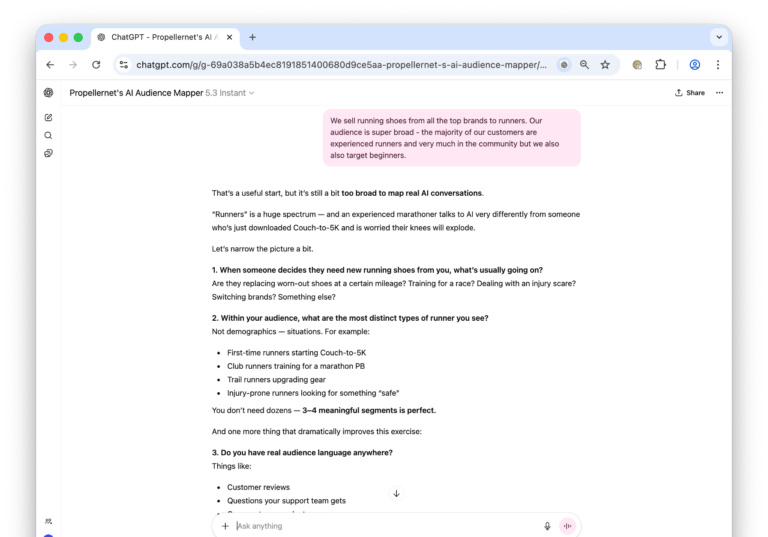
I’ve built a simple custom GPT for this that you can use here. It’s not a tool that does the thinking for you, but questions what you really know about your audience. Say your audience is ‘runners’, it’ll push back and give you a set of questions to explore. It won’t generate answers, but it should help you get to know your audiences at a niche level.
The crux of it
We’ve spent twenty-odd years in SEO getting really good at measuring things: keyword volumes, click-through rates, rankings. We’re lucky to operate in a world where we can trust the data and measure it with confidence. AI and LLMs don’t offer that yet. That could change, but for now, a conversation just isn’t measurable in the way a keyword is, and that’s worth remembering as we plan.
So, please stop chasing prompt volume. Start chasing your audience understanding. Then plan your content accordingly.
Want to talk through how this applies to your own content and search strategy? Get in touch, or explore more of our Insights to see how we’re approaching it as a team.