Our Favourite Talks from the Digital PR Summit 2026

Emma Malcolmson
29 April 2026
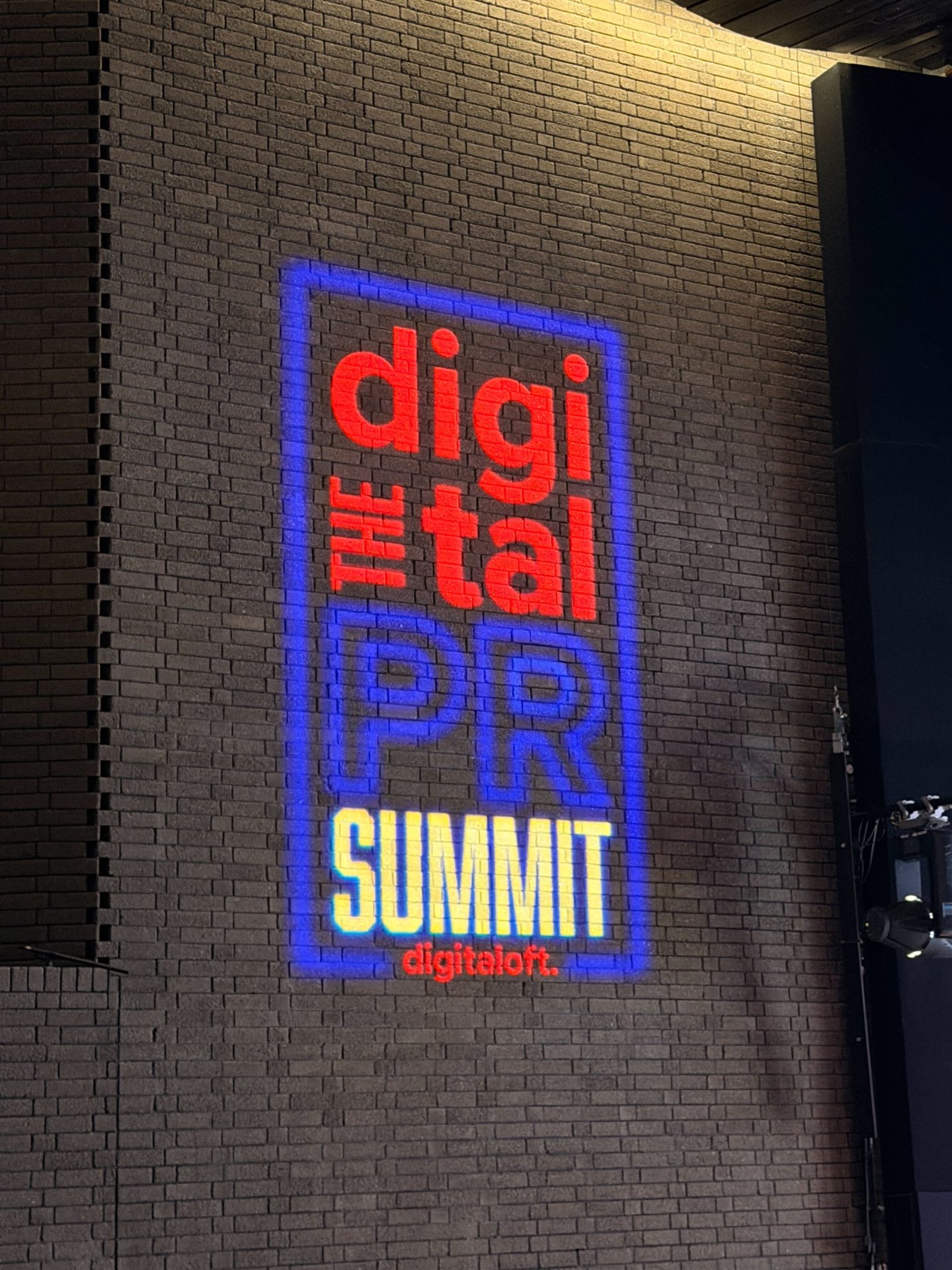
Some of our Digital PR team had the pleasure of attending the Digital PR Summit 2026 in Manchester, hosted by Digitaloft.
They heard from some of the finest minds in the industry, including our very own Creative Director, Richard Paul, whose talk on building creative culture drew such a crowd they had to stop letting people in.
Here are some of the team’s favourite moments.
Isobelle Brown, Digital PR Executive – Building a Creative Culture that Works For Different Personalities (and in Different Locations) by Richard Paul
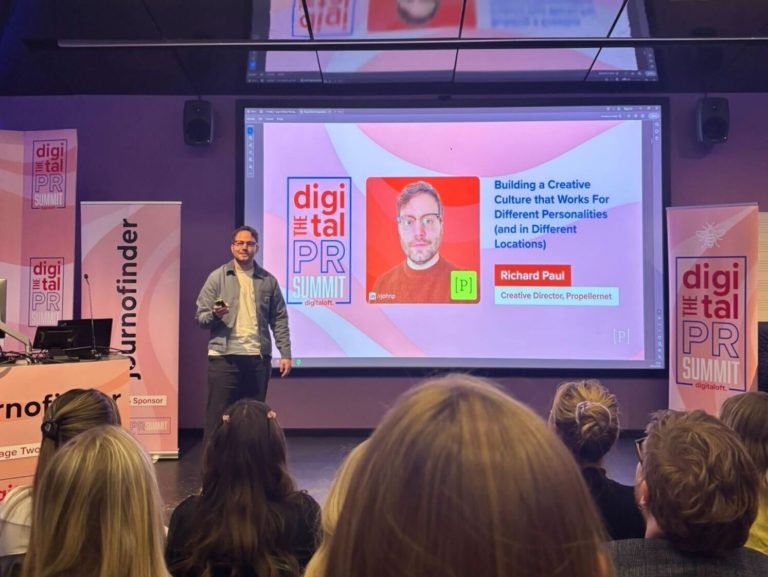
Richard’s talk was a great reminder that building a genuinely creative team culture isn’t just about scheduling brainstorms and hoping inspiration strikes. It’s about creating a process that actually works for everyone, regardless of personality or location.
As an introvert himself, Richard was candid about how putting people on the spot rarely surfaces the best ideas. The point wasn’t that quieter people have all the answers, but that anyone in the room can, and a good process is what unlocks that. Brain-writing over brain-storming was a key takeaway for me, along with leaving a week or two between briefing and ideation to allow for creative independence and time to develop ideas properly.
Location came up as a real consideration too. For ideas sessions specifically, go either all in-person or all remote, as a mixed setup creates an uneven dynamic that stifles the very creativity you’re trying to unlock. Small things matter here as well. When using Zoom, raising hands over the mute button, and for leaders, actively letting junior and quieter voices jump in before senior ones.
There was a lot of warmth around the softer side of creative culture too: getting to know your teammates’ interests and hobbies so you can bring the right people into the right sessions, keeping a shared channel for media and personal interests, and running regular topic calls free from client pressures or KPIs – something that clearly resonated with the room. And underpinning all of it, a simple but easy-to-overlook principle: give credit where it’s due!
Emma Malcolmson, Digital PR Manager – How to Build Effective Brand Mentions for AI Search (What the Data Says) by Ryan Law, Ahrefs
The debate around backlinks versus brand mentions has been circulating in Digital PR and SEO circles for years, but the rise of GEO is making that conversation a lot more streamlined and a lot less nuanced.
In a PR world where securing backlinks in featured coverage is arguably harder than ever, Ryan brilliantly articulated how this conversation has been evolving. Brand mentions are becoming just as valuable as links, if not more so, especially when it comes to appearing in AI-generated search results. The more a brand is mentioned, the better its visibility when LLMs are training, and the stronger those models’ understanding of what the brand does – which means more recommendations to real searchers.
But these can’t just be any mentions. Semantic context – how and where a brand is mentioned – matters more than ever.
While brand relevance has always been central to any good story, it was reassuring to hear that Digital PR isn’t dying. It’s evolving, a bit like an adolescence. Keeping your brand consistently in the press with relevant stories and genuine expertise validates what smart PR practitioners have long known. Whether a piece of coverage earns a link or not is becoming less important. And in hindsight, it probably never should have been the only measure of success.
At the end of the day, reaching real humans will always matter more than chasing algorithms.
Luci Schalch, Senior Digital PR Executive – Where Data Meets Storytelling by George Sinnott, Six Chillies
Data plays a vital role in most successful Digital PR campaigns, but it’s often treated as just a number on a page rather than something that holds the story. George brilliantly reframed that: data is where the story starts, not where it ends. The spreadsheet is the raw material, not the finished product.
It’s easy to fall into the habit of listing stats without asking what they’re really telling us. His example: people spend 3.5 hours a day on their phones. A great stat, but if you stop there, you miss the story. That’s where his framework comes in:
Number > Scale > Context > Meaning > Framing
The number is 3.5 hours. Scale it up and that’s 11.6 years of your life. In context, that’s over a decade. In meaning, that’s your entire twenties. And framing is where you decide whether that’s time lost, connections made, or opportunities missed.
One simple data point, five steps, and suddenly it lands with so much more impact.
The key takeaway is to look for patterns in your data and, most importantly, lead with the meaning, not the number.
Lauren Watson, Senior Digital PR Executive – Journalism In The Age Of AI: What PRs Need To Know, Journalist Panel
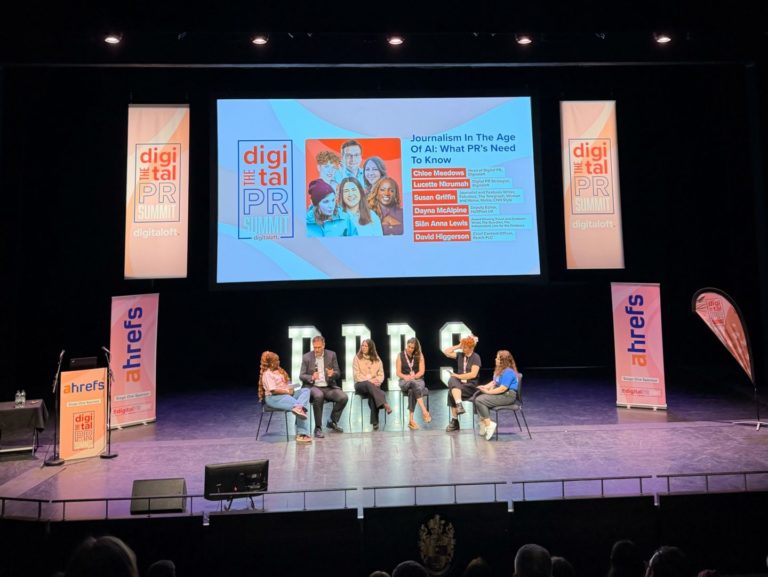
Digital PR and journalism has changed significantly over the past year. So how can we ensure the important stories cut through the noise?
Dayna McAlpine (Deputy Editor at HuffPost UK), Susan Griffin (Journalist and Features Writer), Siân Anna Lewis (Award Winning Travel and Outdoors Writer), and David Higgerson (Chief Content Officer at Reach PLC) explained it all on the journalist panel. Here’s what every PR needs to know:
- Infographics are out. The panel was unanimous on this. If a story is worth publishing, in-house news teams will create their own visuals. Any images sent need to be Google Discover-friendly, or they won’t make the cut either.
- Video and podcast content is hugely valuable. YouTube is big, and sending over exclusive multimedia elements like UGC or podcast clips can be a real differentiator. If a story is already viral, the exclusivity journalists rely on is gone, and so is much of their interest.
- Subject lines are key. Dayna’s approach is to bulk-select emails to delete, then skim-read to deselect anything with an urgent or interesting subject line. A good reminder that we’re not just pitching stories, we’re pitching attention.
- It’s not just about page clicks. Journalists want their stories to make a lasting impact, and time spent on the page matters as much as the click itself. Outlets are focused on cultivating long-term, loyal readers, not just chasing traffic spikes.
For PRs, the takeaway is to bring real, authentic stories to journalists, with a human at the heart of them. AI may be changing how we work, but great storytelling ultimately wins.
Ben McNeil, Senior Digital PR Executive – International Digital PR: Analysing Over 100 Campaigns’ Success by Hana Montgomery
Hana’s talk was an important reminder that international Digital PR is about far more than translating a press release and hoping for the best.
Drawing on analysis of over 100 internationally pitched campaigns, she showed that the most successful international work isn’t about telling the world one generic story. It’s about finding what resonates with each specific audience. The data was telling too. Campaigns built around universal human frustrations, such as workplace behaviour, averaged 18.3 links, while AI and tech-focused campaigns, despite dominating the news cycle, averaged just 3.6.
A lot of this comes down to how you research and frame your ideas. Rather than assuming what local audiences care about, Hana recommended scraping Reddit, social media and local news to surface hyper-local priorities you’d never uncover otherwise. One example was scraping thousands of hotel reviews to find travel insights far more niche than you’d ever think to pitch, but that’s exactly what makes them resonate with local journalists and audiences.
This localisation-focused approach is something we already weave into our international campaigns, and it was good to see the data confirm it works. The same story can land as national pride in Eastern Europe, a shocking exposé in Spain, or a straightforward data piece in Germany. Getting that right starts with understanding cultural nuance first, then building campaigns around it.
Luke Largan, Senior Digital PR Executive – Faces of Fakery: How AI and SEO Poisoned the Well for PRs and Journalists by Rob Waugh and Sarah Waddington
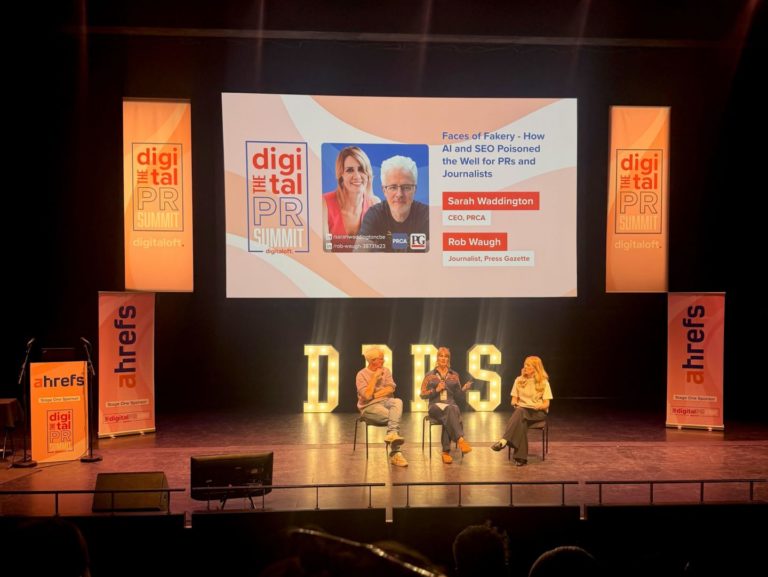
Rob Waugh and Sarah Waddington’s talk went beyond simply calling out fake AI experts, offering some useful reflection points for Digital PRs.
Sarah’s first point was simple but important: stop saying “Digital PR”. PR is PR. Breaking down the silo mentality between traditional and digital teams matters because we all share the same common ground.
She also urged us to upskill in areas like crisis communications and to have the confidence to push back on clients when necessary. Sussing out potential issues before they arrive is a skill that can save a lot of stress down the line.
On fake experts, Rob’s message was equally clear: vet your expert, then vet them twice more. Whether working with a long-standing in-house voice or someone new, journalists now expect to find at least three trusted references to your expert online. A simple but effective way to build that credibility? Get your expert’s quote added to the company website with a photo and bio. It’s a small thing that can make the difference between a journalist using your quotes or not.
The overall tone was one of extra vigilance. Standards and credibility matter more than ever, and Rob warned of an upcoming piece on the fake freelancers now entering the picture. Watch this space.
The Digital PR Summit is always a great reminder of what makes this industry tick – curiosity, craft, and a genuine commitment to doing things well. If any of this has got you thinking about your own Digital PR strategy, we’d love to chat.
Get in touch with our team or explore our Digital PR services to find out how we can help.