Digital PR Podcast LIVE
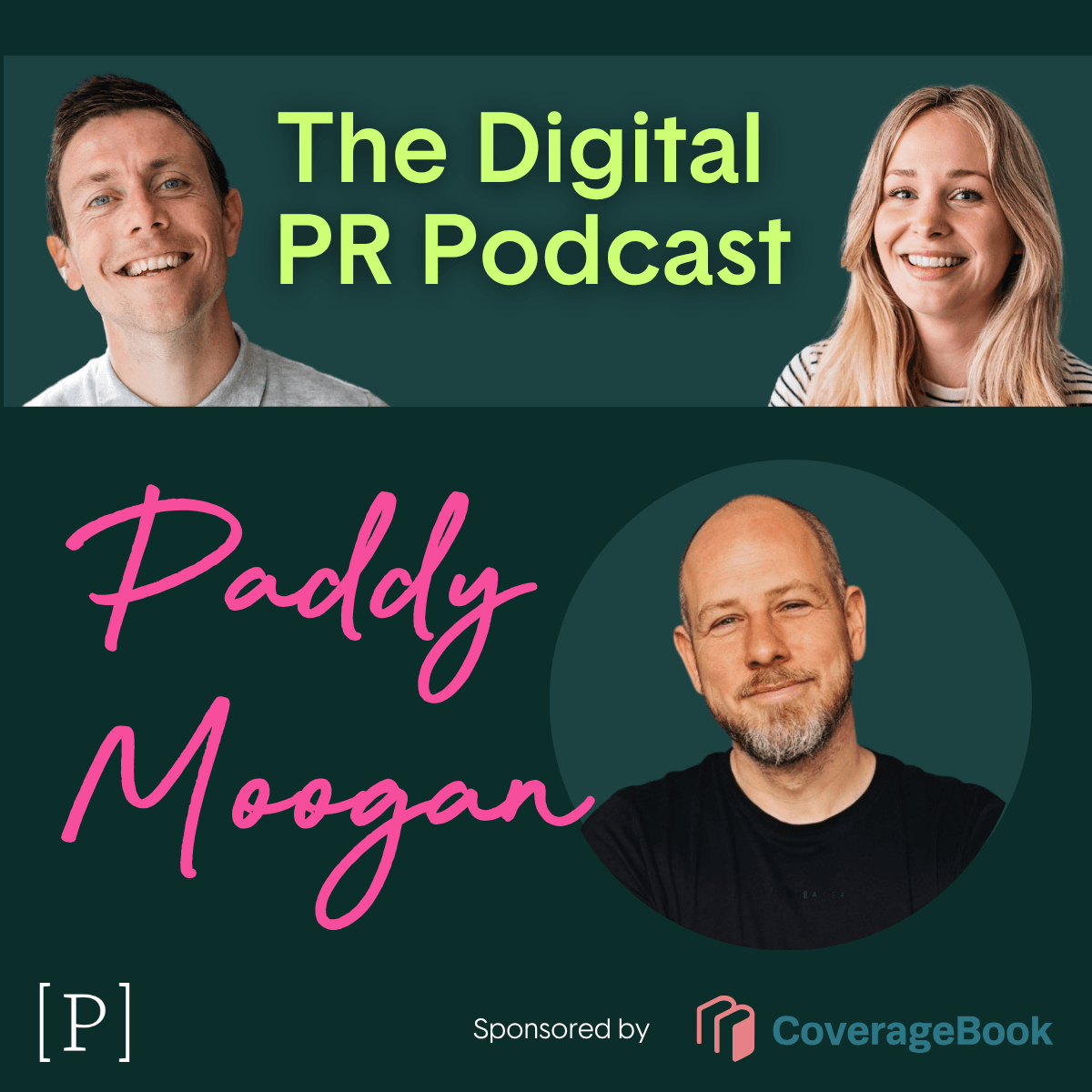
Paddy Moogan – mentor, advisor and founder of Aira and The New Leader – joins us for a conversation on leadership, growth, and the changing face of agency life. We cover the shifts shaping modern work from hybrid models and AI to the pressure leaders face behind the scenes. Paddy reflects on his journey co-founding and scaling Aira, why he stepped away, and what he’s learned since about managing people, setting boundaries, and building a healthy career.
Have a listen or read the full transcript below.
Steve:
Firstly, thank you everyone for coming. It’s an absolute pleasure to see you all here. Some new faces, some familiar faces, some former guests of the podcast. In fact, so many that I had to list them all out so I didn’t miss anyone. In the front row we got Lou Ali, we’ve got Luke Cope – saw your talk earlier Luke that was brilliant – we’ve got Mary Hickey, who also spoke earlier on, we’ve got Alex Cassidy did someone just boo? Was that heckling in action? Shouldn’t do Alex is brilliant and is he here? Is Vince Nero here? I was going to promote the fact that his episode of the podcast was out today.
On the subject of episodes, I’m contractually obliged to say this, if you haven’t yet, if you could rate, review and follow us, it really helps. You know, all that spiel. That sounded really insincere. I’d also like to thank our sponsors Coverage Book. Yes, Laura. Yes. Without whom none of this could be possible. Which I’ve always wanted to say as well. Sounded really official. And Brown Bear Studio, where we recorded the pod, who are brilliant. I don’t think they’re here tonight, but they are amazing.
I also want to thank our marketing team, Gill and Coco, have elevated the pod to new heights, they are amazing and do some fantastic work. So thank you. Now on to the main event. We’re thrilled to be joined by Paddy Moogan, a seasoned digital marketing and lead expert. Paddy, you co-founded Aira, built it brilliantly over a decade and during that time has become a well-known and much loved voice in SEO, content marketing and agency leadership. But what truly sets Paddy apart is his deep commitment to helping people become better managers and leaders. He founded The New Leader, a platform of resources, courses and weekly insights aimed at turning good managers into great ones and also works directly with digital agencies as an advisor and coach.
And tonight we’ll be talking to Paddy about all manner of things. AI will probably come up. It’s going to come up, isn’t it? Well we’ve prepped the question. It’s definitely going to. Changes in agency life, work-life balance, and what it takes to be a great manager or leader. Paddy, thank you so much for being here.
Paddy:
Thank you for having me, and also can tell you’re a PR using the word seasoned rather than old. Yeah, thank you for having me.
Louise:
Great to have you here. First question, you now obviously work with a number of different agencies and advising them, what do you think is easier or harder about running an agency now compared to when you started Aira?
Paddy:
I feel like agency work, I’ve been in this work for 20 years now, makes me feel super, super old, but it all goes in cycles. So I feel like now there’s so much opportunity for agencies, digital PR agencies in particular, because of LLMs, AI, visibility, that kind of stuff. Whereas when I started Aira in 2015, digital PR was still in its infancy. So that made it bit easier because there weren’t many agencies that really did a great job back then. There was probably a handful that did it to good extent. But there wasn’t that many, so that was actually easier. A few years later, it got harder because as we went into the pandemic, it felt there were dozens of agencies doing digital PR so that suddenly got a lot harder. Now, which I’ll be honest I didn’t predict, I was expecting the opposite for digital PR for a long time, but now it’s making a of a comeback. And so I feel like it gets harder and easier throughout those cycles. So at the moment, I’m not going to say it’s easier now, but there’s lots of opportunity right now, and I think that’s what matters rather than agency life itself being hard raised, I think it’s always hard, I kind of joke with some of my clients that the agency business model is kind of set up to hurt, not hurt, break people, because it’s like you’re two clients away from disaster in terms of losing two clients, you’re winning two clients away from taking off with your growth, so it’s actually quite a stressful way of working, but it all goes in loops in terms of easy, hard.
Steve:
So if chat GPT hadn’t become a thing, do you think there would be a different trajectory for specifically digital PR agencies at the moment?
Paddy:
Yeah, 100%. My biggest worry when we growing Aira, sorry I’m going to half look at everything because I feel bad for not looking at your answer to question. My biggest concern was always the measurability of it and showing the impact of it because it was always a classic issue where you got asked for digital PR but what clients really wanted was links, right? That’s pretty much how it always was, improving the impact of those links versus revenue was always difficult. It was possible but it was always hard. And I only saw that getting harder with attribution becoming harder, tracking becoming more difficult. And so during that period around 2020, 2021, 2022, I was worried about the long term future of it, for those kind of reasons. Now LLMs have given it a new breath of life, in terms of its value, because we all know that PR can drive visibility, visibility can drive mentions in LLMs, so it feels like that value is becoming bit easier to demonstrate again. So it’s kind of overcome that challenge that I was feeling at the time I was running Aira.
What’s the impact? You have to prove the impact of it. And the way I looked at at Aero was if you’re charging 5, 10, 20,000 pounds a month for digital PR, you’ve got to be able to have the conversation about how much that is driving for a company. You might not be able to prove it, but you have to be able to have the conversation. And I just saw that getting harder and harder. Now, it’s not easy, but it’s coming back around and becoming a bit easier again.
Steve:
Do you miss it at all? Like what are the elements that you miss if any, because you were running an agency like me and Lou run a team which is very very different you’ve got a lot on your on your plate running an agency like what bits do you miss? What do you wish you could go back to?
Paddy:
Some of my old team are here, so clearly I miss it absolutely, I do miss them. I miss elements of it for sure, I won’t lie it was stressful, it’s hard running a company generally and I think running an agency is one the reasons why it doesn’t make work, but that also is a driver, so it’s hard but you get on with it, you crack on and you just try and make it work. So I do kind of miss it even though it was really stressful. But there definitely times now where I’m like, it’s not a problem anymore. I haven’t got worried about it the way that I used to. So there’s definitely elements of it where I’m glad that it’s just me looking after myself as a contractor, freelancer, consultant. Because I always struggled with the pressure of people.
Ironically, I love the people side of an agency and a business, but when we got to the point of error where it was like 15, 20, 25 people, all I could look at was, they’ve got a mortgage, they’re about to get married, they’re about to have their first kid, and I’m like, don’t screw this up, because if you screw up the business, it’s going to affect them, and that was always there, and that’s not particularly healthy, and I didn’t realise at the time how unhealthy that was.
Steve:
Yeah, so you took on a lot of that pressure yourself and yeah.
Paddy:
Yeah, and that’s not the way it should be done, but I couldn’t help it and I couldn’t help putting some of pressure on myself to make sure we doing the right things and doing right by people. And I think it’s mostly a good thing because it drives you in the right direction, but sometimes when things get difficult, you take all of that.
Louise:
When you talk to agencies now, I imagine this might be something that comes up with them. What’s your advice on that point around, you know, I’m sure it’s not, don’t care about people.
Paddy:
I think it would be easier if people didn’t, and there are agencies out there who, yes, unfortunately, and companies who don’t care about their people, so it is easier to be like that boss, yes, I don’t believe in that whatsoever. But I feel like I do try and advise on essentially looking after yourself, and it might sound a bit corny, but just really being kind to yourself during those difficult times. I wasn’t a lot of the time, and it was only really after looking back at it, I was like, wow, you’re really under that pressure and it was only afterwards that someone is actually my favourite, like well who is putting that pressure on you? So it was my own fault really but now I try and advise founders I’m just kind of taking a step away not underestimating little breaks, little holidays, put the phone away for a couple of hours, those kind of things I think they really do add up. Also for anyone who doesn’t own an agency, it’s also true. If you work in a busy, kind of high-paced environment, you still need those moments to step away, otherwise it compounds and builds up and it can get a bit too much.
Steve:
Yeah, I mean it’s very intense at the moment with so much changing so quickly and we did want to touch on AI for people that are maybe at the start of their career journey or just breaking into the industry. It’s quite a challenging time I would say. Like what advice would you give to people who are at that phase of their career and might be concerned about AI?
Paddy:
If I was at that stage of my journey now, I would definitely try and lean into it and own it and by the case of here, I’m always not going anywhere. I think some of it is bit over-hyped, but no matter what, it’s here to stay. So I feel like at the very, very basic level, you have to figure out how it may affect your job. Whether you work in PR, creative content, SEO, PPC, start to figure out, what can it do that helps me? How can it make me better? How can it be a really good assistant to me? And I feel like if you don’t have that, you’ve got no clue as to how it could end up replacing you at some point. You have to understand it first. So I’d definitely start there.
And I do believe now though that if you are say a PR, the skills for PR, creative, outreach, ideation, all that kind of stuff, I do feel like they’re kind of almost like table stakes. Now you have to be good at those things no matter what. The bit where you can differentiate yourself and kind of push AI to the side are actually softer skills. So for example, knowing how to manage clients, having a conversation with a client who’s angry because you’ve made a mistake on the campaign, knowing how to talk to them or knowing how to say no to a client. We’re all really bad at saying no to clients, right? But knowing how to do it in a positive, constructive way when they’re wrong or they’ve not understood something. Those kind of skills or looking ahead 12 months and just knowing what’s going to go wrong on a project before a client does. Those are the kind of things I think protect yourself against AI because for the foreseeable, AI can’t do those kinds of things. They can’t have that intuition when you’re sat with a client. And you just know they’re little bit touchy, little bit unhappy, and you drill into it a little bit. So I think it’s the softer skills that are going to protect us against what AI could do, because it is going to take some skills, some tasks, and just automate them. But those are the kind of things you have to be able to do anyway. But it’s the softer skills that I would personally be really leaning into. And also, if you work at an agency or you’re in-house, and you’re good at those things, trust me, your bosses will notice. They really value people that are good at those softer skills, who can have hard conversations, who don’t run in this direction when the fire’s over here. Like honestly, your bosses, your managers, the agency owners, business owners, they value that stuff. And again, AI can’t do that. That’s probably where I’ll be doing, or where I’ll be going.
Louise:
Do you have any thoughts on the, I don’t know if it’s actually tools, if it’s just one tool out there, which automates the whole digital PR process using AI, so comes up with the ideas, writes expressively, sends the emails, builds media lists. I guess like, yeah, how do you feel about it? I mean, because you were saying that there’s elements that will naturally, AI might take parts of a digital PR’s job. And that’s maybe the first iteration of this is actually a tool that says that it can do… What are you thinking about it?
Paddy:
I can imagine how that’s possible. And again, I feel this is why it’s important to try it. Like, I would be trying to do that. Could I literally, and I can say this now, as an ex-agency owner with ex-team members in the room, if I was running an agency right now, I would be trying to say, okay, could I automate the whole process? Not to get rid of people, but just to see, is it possible? Is there actually a challenge here that at some point a client could go and do this themselves? So I do think it’s worth seeing if it’s possible. I don’t, I still struggle with the idea that it would do from start to finish because as anyone who sees run campaigns there’s always bumps in the road right even the best campaigns and once you see shared and the ones that go viral there’s always problems challenges behind the scenes that’s where I think the AI would struggle a bit more because it can’t always foresee what’s going to go wrong you can’t foresee the clients branding coming to you and be like I actually can’t use that bit of data you can’t use that font or whatever it is and so it’s gonna be challenges along the way. But I think the process itself, yeah, it’s possible. I wouldn’t trust it completely. It still needs that element of oversight. And I think the most basic level, if you think of AI as an assistant and a tool, everything else becomes a lot easier. So if you’ve got a whole process and you can assist in that process, fine, I think that’s okay. I don’t think it will replace the person doing the process if they embrace it and they’re using it.
Steve:
I’m going to move us away from AI. I think everyone’s heard about AI quite a lot today. Very useful part of the discussion. But I wanted to talk you about work-life balance. You’ve led an agency talking about some of the things that you felt pressure with and put pressure on yourself. What’s a fair expectation of work-life balance? What does going above and beyond mean in a busy industry? There’s a lot of buzzwords around it. And sometimes it’s very, very unclear what the expectations are and what people demand of themselves. What’s your view Paddy?
Paddy:
Yeah, it’s actually a really hard one because again having run an agency and seeing people go above and beyond but also seeing people who have not gone above and beyond where maybe I felt they should have done or should have put in a bit more effort. It’s hard to know where that line actually sits because on one hand I think the pandemic’s been quite good for this that in terms of knowing that okay my job is nine till five, eight till four, whatever it is and then switching off to half going home or walking into your kitchen and making dinner that’s a good thing I think that has become clearer since the pandemic that it’s okay to do your job, log off and don’t think about it again to the following morning I think that’s been a good thing but there’s a reality, it’s an unspoken reality, particularly in agencies, if you’re the person that occasionally does go above and beyond, who stops a bit later, who doesn’t mind mucking in when they need to, I think that is noticed. And so it is going to make you stand out, and it’s difficult, and it’s where I struggle a little bit, because I don’t want to advocate for anyone working crazy hours, being in the office till midnight, all that kind of agency world stuff that’s happened in the past.
But being prepared to do it occasionally, it helps, it does, it gets noticed and so I always struggle with that because I don’t want to advocate for it but the reality is it can help you. I think that it’s not just about the hours though necessarily, I think sometimes going above and beyond is just being prepared to get involved in something that maybe isn’t your direct remit so if you see a colleague struggling on their project or their client, go and help in them, even when you don’t need to, I think that can count as putting a little bit of extra effort in. And so that’s the kind of thing where I’d be looking to my team to say, are you prepared to just be that kind of support for your colleagues when you don’t really have to be on paper? I think the issue that I sometimes had as the owner of an agency is seeing people that would literally do their job to the letter and not be prepared to do anything beyond that, but then still expect quick progression every six months and all that kind of stuff. Those two things don’t really reconcile.
Steve:
And how did you deal with that kind of scenario? Because that’s tough, right? If someone’s doing their job to the letter and you can’t really fault them for it, but they want that quick progression, it just, let me think of the way the phrase is, was it just saying it out loud to them that you need to do a bit more? Was it, like, how did you kind of deliver that message?
Paddy:
So we tried to do it by being clear what progression meant and what constituted different types of pay rises as well. Because a lot of it was around pay, because promotions will happen every so often, but pay rises might happen in the middle.
And I think we tried to differentiate between someone who got a standard pay rise, inflation, little bit kind of above that maybe, and someone who is going to get a lot more than that by trying to show, okay, well, someone who goes really, really above and beyond their job is going to go to the higher end of that threshold. Someone who literally does what they need to do. Yeah, okay, everyone needs to get increases every so often, but you’re only going to get the basic level. We tried to put that in place. It’s harder to action in reality because you end up with people who are unhappy with what they get.
But we tried to be really clear that if you want to progress this kind of level, here’s what you need to be doing. And it was always pushing beyond where you wanted to be or where you were, because that’s what you have to do to move to the next level. I think it was really hard. And it got to the point where you just accept that you’re going to make decisions that are going to make some people unhappy. And that’s how it is running a business.
Louise:
Do you think that the kind of remote hybrid working in an office, does that affect how much you’re perceived as going above and beyond? Like obviously you had Aira during COVID, so I don’t know before COVID whether it was it just all in office?
And then I’m guessing all at home, and then hybrid. So I guess interesting to hear your opinions on that style and which one is preferable, but I guess for people working at agencies or in-house, sometimes maybe having the recognition, you might assume that if you’re in office, people might notice you going above and beyond more so than when you’re just doing something at your kitchen table and no one’s watching you do that.
Paddy:
Yeah, again it’s a reality. I think the truth is that when you’re in the same location, it’s not just the going above and beyond, it’s just those kind of random conversations where you work on a project together or you vocalise, you’re finding something challenging and someone comes over and helps you. That doesn’t really happen fully remote unless you go out and ask for help and people might help at that point. But I feel like the office enables it a lot more.
That’s what we got is wrong, honestly, during or just after the pandemic where we were hybrid, but we didn’t account for the fact that, oh, we can’t really see people helping each other. We can’t really see them kind of physically working together on a project. We can’t see them going above and beyond and stopping late, like that kind of stuff. And I think that made things difficult for us. So I think the reality is, yes, it can make a difference to be in the same location, but it doesn’t have to be that way as long as there’s an agency or company you account for it, we didn’t do that very well, we were in that messy period for a while where we were hybrid and people were back in the office a day or two a week, but it was really flexible, so ended up happening was we said to people, come back in the office a day a week, the SEO team came in on one day, the PPC team came in on a different day, PR team came in on a different day, they were all avoiding each other, they were like we coming here, that’s not what we meant, so we had to be bit more clear what we wanted. But I feel like when it comes to progression, as long as the work itself speaks for itself, you’re fine. But again, a of agencies aren’t really set up to notice that or to really track it properly, I don’t think.
Steve:
I think we’ve discussed this before, it was five years since Covid now and it does feel like the shift, it’s not like everyone’s saying, I suddenly want to be in an office now, but there’s definitely more appetite for being in an office and that just might come from personal preference, not even about, my career progression might be affected by it or anything like that, but it is interesting to see the shift. Do you have any advice to agencies around what you would suggest in terms of their set up or is it just agency by agency?
Paddy:
It’s definitely agency by agency but also my advice is to pick a lane and commit to it. Again, we didn’t do that. We thought we’d chosen the option by saying hybrid but we didn’t really commit to it. And that’s partly on me. The company I wanted to run was in an office where I saw people, they saw me. And so I think I didn’t do a very good job of embracing the remote only or remote first way of working. So my advice now to any agencies but also individuals in terms of when you’re looking for jobs or your career, like just know what you want and commit to it. So for a company my advice is okay pick what you want and then commit to it in terms of your policies, your measurement of work, the way that your culture works, you have to fully commit to it. So I genuinely believe that if a business owner wants their team in an office five days a week, that’s their choice, that’s how they want to run their business and they commit to it. If you want to be fully remote that’s fine as well. Neither of are wrong but they can go wrong if your policies, your ways of working don’t support your choice. So again if you’re hybrid you have to commit to what does it actually mean? What does it actually mean until the date in the office? What do you actually expect from people? Because if you don’t set that out clearly, again we didn’t, people either won’t do it or they’ll do it in their own way which doesn’t do what you expected like your teams who don’t like each other coming on different days of the week and doing it very deliberately as we found out. So it’s one of those things where if I could go back and do it again I’d just be, and it sounds bad because you don’t want to be too strict on it but here’s what we’re doing, it’s our decision, we’ve made it and it may mean some people don’t like it but again that’s the reality.
Steve:
I’m just looking down the list of questions we set out to ask him. We’ve got an absolute belter here, I think, and I’m fascinated to see how you answer this one. The question we had is, do you think you can have friends at work, should you? That’s controversial, isn’t it? How are you going to answer that>
Paddy:
Absolutely not. I’ve worked with colleagues who have become friends and then got married and had kids so it can work out sometimes. Yes, of course. I think you should be allowed, as even we’re saying it, to make friends at work. We work five days out of seven, right? It’s a bit shit if you can’t make friends with people. But on a serious note, there are boundaries. One of the biggest challenges that can come up is if you’re friends with someone, you work on the same level, then one of you gets promoted and you have to be at the boss of that person who is your friend and your colleague, but you used to be at the same level. I had that back in my previous life. And you have to be able to draw boundaries there and kind of respect to the fact that okay you are friends you are peers it used to be the same level now one of you is a manager and I feel like as friends you need to equally respect those boundaries I feel like if you’re the person who’s trying to put those boundaries in place and your friend isn’t up for it they’re probably not a friend like a good friend should realise okay, this is a bit awkward it’s a little bit difficult but we’re friends let’s figure it out so yeah absolutely make friends at work, but I won’t lie, it can be challenging sometimes when you get those kind of weird dynamics and when things go beyond friendship as well sometimes that can get a bit difficult and thankfully I’ve not had that too much but I also had managers who I thought okay you I’ll let you deal with that
Steve:
Kinda wanna do some more digging, but names will be shared…
Paddy:
Being serious for a sec. When you run a company, so we got around 50 people at one point and you have nights out, you’ve got people who are friends, you’ve got people who are probably more than friends. I was kind of like, you know what, I’m okay not knowing. I’d rather not know what’s going on because also I’m the boss. People don’t want me knowing stuff anyway.
Steve:
Should we move on?
Paddy:
You know that people are going to be friends and that kind of stuff and I love that side of it but I think there’s also an element of you’re trying to run a business and that’s the line which I tried to tread which was like okay well things are going to happen there’s an element of this which is like, okay I need to kind of just separate that from the business otherwise you get sucked into it it’s kind of like well if things people are adults you trust them to get on with things with adults and that’s the line that I took and otherwise it just dominates too many things and becomes really difficult and I want an easy life. So let’s leave it to them.
Louise:
I subscribe to your newsletter and I find it really really interesting, lots of good tips around how to be a manager, to be a lots of different subjects. I’d be just intrigued, I’m just going to distill it into three words. You have three words that you would describe as a good leader or a good manager or a mentor? What kind of three things sum that up?
Paddy:
I think listening is one of the first ones, if you’re a good listener. Very few people are truly good listeners because people think they’re listening and what they’re actually doing is thinking about what they’re going to say next. So they’re listening but they’re not really present with what that person’s saying because they’re like, okay, well, I need to respond to this. I’m going to start thinking about my response before they’ve really finished what they’re saying. So I think as a manager, leader, or just a really good colleague or friend, if you’re actually a really present listener, that for me makes some which is many other things easier. Selfishly I think it’s one of the things which I’m quite good at. Randomly, it sounds really weird sitting up on a stage with microphone saying this, but I’m not very confident when comes to speaking. I had a little speech impediment when was a kid. And so I am never the loudest person in a room usually. So I became naturally a good listener because I didn’t like talking very much. I was a conscious of my accent, so I had a bit of a speech issue. And so it accidentally made me a good manager.
I would genuinely listen because I didn’t really want to talk because I happily ask you one question and let you talk for five minutes, but it turns out that’s actually really good for a manager to have and the worst managers are the ones who just they don’t listen, they don’t care. They just want their own thing to happen in the in the conversation. So that’s definitely one of them empathy, I think it’s one of the most vital things you can have if you have the ability to put yourself in someone else’s position and you manage that person, you’re trying to motivate them, you’re trying to get the best out of them and you can literally sit there and think, okay, what would they do? What are they thinking? What are they feeling right now? It helps you figure out what you should do next. think empathy is the other one.
Third one, trust. If they don’t trust you, you’re screwed. Because it ties in with everything where they won’t come to you with a problem. They won’t come to you with a challenge. They won’t trust that you’re going to do the right thing by them. You’ve got their back to whoever it is. I think trust, empathy, listening, we’re part of the main three, which I’m not a natural at any of those things. I try very deliberately to be good at those things, because they’re not easy. Some people are naturals, but you can definitely teach yourself to be good at those things, or at least better at those things.
Steve:
Do you think you need all of them? Or can you get away with two out of three? Not asking for myself, I think I’ve got them all locked in.
Paddy:
I think they’re all important to varying degrees, you lean into your strengths. So for me listening is probably the one which I’m most good at. But you lean into your own strengths in terms of if you’re very empathetic you do have to be bit careful with that because it can like backfire in terms of over-emphasising with someone to the point where it affects you. But I think they’re all pretty important but they kind of change in importance over time. Like if you’re just starting to work with someone for the first time just listen to them. That’s it. Don’t worry about anything else. Just listen to them and understand them first.
Steve:
We’ve only got a couple more questions and then we’re going to throw it open to the floor. So if anyone has any questions for Paddy, you will get a chance to ask them. It feels like I’m doing the more light-hearted questions because I’m going to ask, do you have anything from your working life that, just for context, Lou came up with the questions. I verified them as well. But do you have anything from your working life that still makes you cringe now? Can you share?
Paddy:
There’s many things I look back on when I was running my company that I thought why did you do that? But the one thing that actually came to mind when you originally asked me this was I think we’re about two years into error maybe two and a half years we got to about 15 20 people or so and We did a lot monthly I think it’s monthly updates me and my co-founder was standing in front of the team like this and do an update to the company and at that point we hadn’t lost any team members. We had a hundred percent retention in the team
And I stood up to people and said, OK, our goal is 100% retention across the whole team for the next couple of years. And I was like, so I’m basically saying, no one is ever going to leave this company. And I can hear myself saying it now. I can remember the slide where I put 100% team retention. Now I’m what the were you talking about? Like everyone leaves a job at some point why were you expecting all these people sat in front of you to never leave? And I was like looking back on it was like it’s just ridiculous, stupid, but also it makes me cringe even more because at that point in time if someone did leave a bit afterwards. I took it so personally, that makes me cringe now. You don’t want people to leave, but I really took it in a way that, what have we done wrong? What could we have done better? I’m trying to build a great place to work, but they’re leaving it for somewhere else that isn’t as good, in my opinion. Sometimes I was right, sometimes I was wrong. But I took it really personally, that makes me cringe now. Because I’m like, it’s fine, people leave jobs. It took me probably another couple of years after that to realise it’s fine. Towards the end I was like okay someone sent me more than others but it happens it’s fine people move on sometimes I come back but yeah it’s fine.
Steve:
They I had the same actually when I took over the team here. I kind of had that unrealistic aim. I was like, I just want everyone to stay all the time and it’s just not feasible.
Paddy:
You think of it as a reflection on you, particularly when you’re a manager of a team. And sometimes it’s not about you. Sometimes it is, but realistically, a lot of the time, if you’ve got a good place to work, a good culture, reasonably happy team, good workload, nine times out of ten, you couldn’t have changed anything. It doesn’t mean you shouldn’t reflect on it and think, OK, could we have done something better? So we got to the point where we did exit interviews with everyone who left. And then that was never conducted by me or anyone else, senior. That was good, but most of the stuff we couldn’t really change.
I couldn’t really get over it sometimes but that really helped me think well they were gonna leave anyway he couldn’t changed it and then I suddenly felt a lot better about the whole thing so yeah I definitely cringe over that still and this is a much longer story so I won’t tell it, but I also cringe when a client once got told they were gonna work with me and my odd agency and I said no not Paddy. They were right. I’d screwed up a project a few years before and they remembered and then they came back and it like that and not him. The reason that actually it’s cringy and horrible to think about is because so when I made the mistake on their project I was like a mid-level consultant relatively new into the company and I did a bad job on their project so fair enough. When they came back and said no to working with me I was running the whole office and so it kind of got around the team that the guy that runs the whole office has just been told by a client they don’t want to work with him so of course everyone wanted to know why, and I had to explain the mistakes that I’d made. So was quite humbling. Yeah, I’m not bitter about it or anything like that that time. But yeah, so you’ve made me reflect quite a bit on myself.
Steve:
Let’s ask Lou the same question. I’m quite intrigued. Let’s put you on the spot. Do you cringe about anything? I know I always like to throw a little curveball for you.
Louise:
Oh a million mistakes I’ve made which I’m you know… I don’t know. I caused us a slight fright in Luton once with a story that was about Christmas and it was awful and I still cringe about it now.
Steve:
I remember you calling me about that one and we chatted it. I thought complete transparency made a joke, a poor joke about a carrier pigeon in like with a mobile tech company and I thought we would get a little laugh and they just look stony faced and it was I genuinely wanted to just leave the call immediately. Abby remembers it. Abby was on that call. It was really bad. Really. I won’t name the brand, but could have been. Lou, last question.
Louise:
Yes, our last question. We asked this to Lou Ali when she came. I don’t know when it was, but the last time we did this. Room 101, you’ve been in the industry for… You’re a seasoned professional, as Steve said. I’m not going to say it’s a long time. Are there a number of things that you would like to put into Room 101 that you never want to either hear or experience again?
Paddy:
So yes, I am a seasoned professional, 20 years or so, but the first thing that came to mind is very, very recent. GEO, AIO, whatever it’s called today, I’m just a bit done with it. And there’s value in the you know, the thinking behind it. But I wish that we could just push it to one side for a little bit until people figure out what we’re actually doing here and it actually has a big impact. Because at the moment, I feel like the hype doesn’t match the impact and I feel like the amount of attention it’s getting and it’s the new terminology, the new ways of working, I wish I could just bin it for probably another three or four years. But it’s what we do as an industry, we latch onto things and we get excited which is really, really nice but then we kind of like, okay, well, we’ve got a job to do. Actually, your podcast with Rand, I was having to listen to that and I think it came around links really probably not being so much for the thing and I was like, because of ChatGPT, I was like, Google still exists, there’s still a big part of the market, so I’m having issues at the moment with the, I guess, attention it’s getting, which I could just not put it in room one on one forever, but definitely for a couple of years, and then come back to it when we’re a bit more, what it is, what it means, and it’s actually gonna have an impact, because it will, I’m not naive about that, but that’s definitely one thing. Am I allowed to say PR agencies are just make shit up?
Steve:
Sure. Absolutely.
Paddy:
I know it was a thing for couple of years, certain agencies were known for making up data and making up surveys and then it felt like got curtailed a little bit but now because of ChatGPT and making up spokespeople and stuff like that it like it’s coming back around again so I wish that could just disappear as well because it’s not doing us any favours as an industry at all. I wish I could get rid of that. I think I’ve one more.
Can I say domain authority as well? I think we’ve moved past that as an industry now. I feel like it used to matter a lot, I wish we could just move past it completely and focus a bit more on the actual sites themselves and are they actually of any value to a human, not just an algorithm of someone. I know the guy that built it, I felt bit bad about that. There’s a number of reasons for that. I think we’ve grown past it. I think those kind of metrics are fine. I’m a geek so I do support that kind of stuff but I do think we’ve moved past it and I’ll see it mentioned and used in ways I’m like I think we’re just beyond it now so I think I’d get rid of that as well. I did make a whole list.
Steve:
Lovely, yeah, I agree with all of them good choices. That was our final question. It was so does anyone have any questions for Paddy? We have a few minutes left. It’s totally fine. If not Lou is also gonna sing us a song. Abby did you raise your hand?
Q1:
Aside from AI, what do you think are the biggest challenges for new agencies coming into the world?
Paddy:
Really good question. I do think that standing out is harder than ever because you still see a lot of the same types of executions of campaigns, the same formats, like the same… Actually, I think I had indexes on my Room 101 list and most inscrutable. I was doing that 15 years ago, come on, guys. But still that makes it harder to stand out. I think standing out is actually genuinely quite hard now, even more so with AI. But I think even on its own, that’s more difficult. I think also recruitment is a bit more difficult, keeping people is more difficult. I do think, again, this shows my age a little bit, but I was of the generation where when you joined the job, you were probably there for three, four, five years, and if you left after less than two years regularly, that was genuinely perceived as not a good thing.
It’s not as simple as that obviously. There’s good reasons for moving around. But now I think that’s become quite normal, which again is completely fine. But that is a challenge for an agency because you train someone up, it takes 12, 18, 24 months, and then they might move on for very good reasons. So think retention can be bit more difficult for newer agencies compared with the ones who’ve been more established, know them, they’ve got their brand and that kind of stuff. So they’re probably the main things that I’m definitely seeing being more difficult as well. As well as remote versus office thing, that’s still very much up in the air for me with agencies where people expect a lot of flexibility and some agencies simply can’t offer it without kind of like completely bending on policies that they believe in. that puts me in difficult spots. I want to keep growing and hiring people but if that means going fully remote, they might not want to do that. So it’s a difficult spot to put themselves in. But yeah, I’m gonna keep thinking about that because I feel like that’s actually a really good one that’s gonna keep on mind usually. Also I’m gonna put a seasoned professional on LinkedIn.
Steve:
Any other questions?
Q2:
Do you think there’s such thing as a natural leader?
Paddy:
Okay, I definitely get a good feel about people I think sometimes you you when you interview someone. You often know in ten minutes most of the things you need to know and I’ve seen to sense check and make sure you’re right. But I have also gotten that wrong. So actually one of my first ever hires the first 10 minutes of their interview I was like no way this isn’t gonna work I don’t think they were doing a great job at you know interviewing essentially and the final 15 minutes of the interview blew me away so after the first 10 minutes I was like no this isn’t gonna work so I got proven wrong on that one and they’ve now gone on and done some really really cool stuff and going back to the natural leader stuff and yeah definitely are natural leaders but I think if you’re not one it doesn’t mean you can’t learn it like I don’t think I’m a particularly natural leader. A lot of the stuff that I’ve learned to become a better manager or leader, I’ve literally read a book or listened to a podcast or just tried to speak to people about how to do it and then had to deliberately do it.
It’s not the listening thing. I’ve tried to learn that more leading to that kind of perceived weakness that I had when I was growing up. But I still have to deliberately engage my brain in that way. When I’m at home with my wife, she’s like, OK, well, you’re really good at listening at work. What happens when you’re at home? It’s just like, I’m not natural or not. I have to think about it. If I’m meeting with someone or an interview, I’m deliberately switching those parts of my brain on. Some people don’t have to.
So I feel like you can definitely be a natural leader, but it doesn’t mean you can’t be a good leader if you don’t feel like you’re natural. I think a lot of it can be learned. I do think the element though of just giving a shit about people, like if you don’t do that, that’s hard to learn, right, if you’re just that kind of person. Being kind, being empathetic, those are natural things, but they can be learned to some extent. But there are some fundamentals that probably mean someone should never ever be a manager. They’re the ones who often don’t know it sometimes ironically.
Steve.
One more question.
Q3:
What happened with the client who didn’t want to work with you?
Paddy:
Yeah, we closed the project, someone else more junior delivered it. No, I just kept an eye it from a distance and secretly resented every single thing that happened on the project. I don’t even know if they exist anymore. They were a huge reviews platform. A bit like a trust pilot, but a bit different back in the day. But yeah, we still won it. So the sales guy who sold it, I still remember walking over his desk and he showed me the email where he said, no, not Paddy. And he was like, to be fair to me, was like, are they dicks? I was like, nah, they’re right.
He was like, do you me to still try and set it and pitch? I was like, yeah, do it. Just do it without me, obviously. Yeah, we still close it. It was a one-off project. It was really simple, really simple piece of work. So it was fine. But as you can tell, it’s always stuck with me. But you learn from that kind of stuff. And you realise as well, clients don’t forget stuff. Thankfully, it came back to the agency as a whole, because generally, the agency was good. But that just didn’t want a bit of me anymore. And yeah. It’s one of those things I’ll try and use as a learning moment now, more than anything else.
Steve:
Are you going to do the outro? We never decide in advance. That concludes the discussion.
Louise:
Thank you so much for the questions and thank you so much for listening and coming in the first place. Lovely to see everyone and thank you more importantly to Paddy for answering all our questions. You’re wonderful guest Paddy. Thank you.
Paddy:
Thanks a lot.